Lobuche Peak Climbing

Lobuche Peak Climbing

Trip Overview

  • Best price guaranteed
  • No booking fees
  • 1 Review

Key Information

Trip Length

22 days

Activities

Trekking/Climbing

Difficulty

Strenuous

Max Elevation

6,119m/20074ft.

Meal

Breakfast/Lunch/Dinner

Accommodation

Hotel/Tent

Transportation

Flt KTM/LUA/KTM

Group Size

01 Min/12 Max

Lobuche Peak Climbing – Trip Description

Lobuche Peak Climbing is a thrilling high-altitude adventure in the Everest region of Nepal, offering climbers the chance to summit at 6,145m/20,160ft while enjoying spectacular Himalayan panoramas. This expedition combines classic trekking through iconic destinations like Namche Bazaar, Tengboche, Dingboche, Gorakshep, and Everest Base Camp with a challenging peak climb, making it perfect for both experienced climbers and ambitious trekkers seeking their first Himalayan summit. The route features breathtaking views of Mount Everest, Lhotse, Nuptse, Ama Dablam, and Pumori, along with rich Sherpa culture, monasteries, and alpine landscapes. With professional guides, acclimatization stops, and well-organized logistics, the Lobuche Peak Climbing trek ensures a safe, rewarding, and unforgettable high-altitude adventure for adventure seekers and mountaineering enthusiasts.

Lobuche Peak Climbing Trip Overview

Lobuche Peak consists of two summits: Lobuche East (6,119m) and Lobuche West (6,145m). In-comparison to Lobuche East, Lobuche West Peak is one of most challenging and technically demanding trekking peaks in the Everest Region. Lobuche West was recently opened for the expedition; so we have preferred West Peak to try something different than a usual trail. There are several routes to ascend the Lobuche West; however, we climb from the south ridge which is less risky than the other side. Lobuche Peak is known as expedition peak which is technically challenging and demands more physical fitness. We have tailored the trek after consulting with the experts.

Lobuche peak climbing commences with 30-40 minutes of scenic mountain flight from Kathmandu to Lukla. The journey then continues following the EBC, Gokyo Ri, and Everest Three Passes Trekking trails tracing through the villages: Namche, Pangboche, Dingboche, Lobuche, Gorakshep. Namche is the tourist hub of the Himalayas which serves all the guests with modern amenities. From Namche, we head towards Gokyo Valley which is famous for the sacred lakes, Ngozumpa glacier and pristine scenery of this region. From Gokyo valley, we head towards Gokyo Ri Peak (5,330m/ 17,483ft) which offers the stupendous view of numerous massif, glacier, and tranquil landscapes.

The journey first ascends to EBC before ascending Lobuche Peak. The Base Camp of the world’s highest Peak offers the pristine scenery, dazzling mountains, Khumbu ice-fall, and Khumbu glacier. One of the highlights of the trek is the Kala Patthar Summit which is a renowned vantage point for the spectacular view of Mt Everest, 360° Himalayan range and exquisite scenery. The journey from Lobuche Base Camp to Lobuche summit is challenging and strenuous. We use ropes, ice-axe, crampons while ascending the peak. The Sherpa guides are the ones who make your expedition successful; so always follow their instructions. Once we reach the top, we can see Mighty Everest, Tawache, Ama Dablam including several peaks of the Himalayan range.

MMT is one of the renowned trekking companies whose success rate is 99%. We tailor budget, time, AMS and eco-friendly packages with a suitable itinerary. The itinerary of the package is of 23 days and we arrange all the transport, permit, accommodation and gears throughout the trek; the well-experienced guides also provide training to use the gears. The best trekking seasons in Nepal are Spring and Autumn; so we request you to be more thoughtful while finalizing the packages. MMT is one of the leading authorized companies in Nepal and we guarantee to ensure your successful climb.

Lobuche Peak Climbing – Trip Highlights

  • Summit Lobuche Peak (6,145m/20,160ft) for an ultimate high-altitude climbing experience.
  • Trek through the classic Everest Base Camp route, including Namche Bazaar, Tengboche, Dingboche, Gorakshep, and Kalapatthar.
  • Enjoy breathtaking Himalayan panoramas of Everest, Lhotse, Nuptse, Ama Dablam, and Pumori.
  • Experience traditional Sherpa culture in villages, ancient monasteries, and local communities.
  • Trek through beautiful rhododendron forests, suspension bridges, and scenic valleys.
  • Professional guide and climbing support for safety and high-altitude trekking expertise.
  • Emphasis on acclimatization, high-altitude safety, and comfort throughout the trek.
  • Stay in teahouses, base camps, and high camps with well-planned meals and logistics.
  • Summit day offers unforgettable views of Khumbu Glacier and surrounding 8,000m peaks.
  • Scenic descent through Dingboche, Tengboche, and Lukla, combining adventure and culture.
  • Perfect for experienced trekkers, mountaineers, and adventure seekers.
  • Ideal for travelers seeking high-altitude adventure, Himalayan mountaineering, and Everest region trekking.

Lobuche Peak Climbing Itinerary

  • Day 01 Arrive Kathmandu (1,300m/4,265ft)
  • Day 02 City Excursion and Trek Preparation:
  • Day 03 Kathmandu (1,300m/4,265ft) to Lukla (2,845m/9,333ft) to Phakding (2,610m/8,562ft):  8km, 3-4 hrs.
  • Day 04 Phakding (2,610m/8,562ft)- Namche (3440 m/11,285ft):  11km, 6-7 hrs.
  • Day 05 Acclimatization and Exploration day:
  • Day 06 Namche (3,440m/11,285) to Tengboche (3,870m/12,696ft):  9km, 6-7 hrs.
  • Day 07 Tengboche (3,870m/12,696ft) to Dengboche (4,410m/14,467):  10km, 6-7 hrs.
  • Day 08  Acclimatization and Exploration day at Dengboche:
  • Day 09   Dingboche (4,410m/14,467) to Lobuche (4,910m/16,108ft):  7km, 5-6 hrs.
  • Day 10 Lobuche (4,910m/16,108ft) – Gorakshep (5,160m/16,928ft) - Everest Base Camp (5,364m/17,597ft) – Gorakshep;   14km, 8-9 hrs.
  • Day 11 Gorakshep (5,160m/16,928ft) - Kalapatthar (5,550m/18,207ft) - Gorakshep to Lobuche (4,910m/16,108ft):  9km, 5-6 hrs.
  • Day 12 Lobuche(4,910m/16,108ft) to Lobuche Base Camp (4,865m/ 15,960ft): 3km, 3-4 hrs.
  • Day 13 Base Camp (4,865m/ 15,960ft) to Lobuche High Camp (5,600m/ 18,371ft):  3-4 hrs.
  • Day 14  High Camp(5,600m/18,371ft)  to Lobuche west summit (6,145m/20,160ft) and trek back to Base Camp(4,865m/15,960ft) /lobuche(4,910m/16,108ft);  
  • Day 15 Lobuche (4,910m/16,108ft) to Pheriche (4,230m/13,877ft):  6km, 4-5 hrs.
  • Day 16 Perische (4,230m/13,877ft) to Tengboche (3,870m/12,696ft):  9km, 5-6 hrs.
  • Day 17 Tengboche (3,870m/12,696ft) to Monjo (2,835m/9,300ft):  14km, 6-7 hrs.
  • Day 18 Monjo (2,835m/9,300ft) to Lukla (2,845m/9,333ft):  14km, 5-6 hrs.
  • Day 19 Lukla (2,845m/9,333ft) to Kathmandu (1,300m/4,265ft) flight
  • Day 20 Buffer day to adverse KTM-LUA-KTM flight 
  • Day 21 Final departure 

Note: 

The above mentioned distance and duration are approximate; and it may vary from person to person or place to place. We have finalized about it after many researches and experts’ suggestion.

Due to the fluctuate climate and turbulent weather in the Himalayas, Kathmandu-Lukla or Lukla-Kathmandu flight may get delayed for one or two hours; or even cancel a day or more. We humbly request you to add few buffer days to avoid any unforeseen circumstances.

Lobuche Peak Climbing Itinerary

Expand/Collapse All
Day 1 : Arrival in Kathmandu

After your safe landing at TIA, one of the representatives of MMT welcomes you at the Airport Terminal. Then, you will be taken to MMT office at Kaldhara and given all the further detail information about the trip. Eventually, the authorized person safely and comfortably takes you to the respective hotel. In the evening, you can enjoy the city night life in Thamel; main tourist hub in Kathmandu.

Food
Dinner
Accomodation
Hotel
Elevation
1300
Day 2 : City Excursion and Trek Preparation

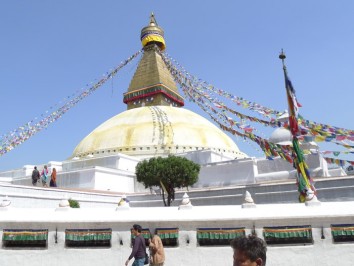
City of Gods and Goddess, Kathmandu, is best known for sacred Hindus and Buddhist Shrines, art, culture and tradition. This day is scheduled to visit the UNESCO listed World Heritage sites including: Swayambhunath, PatanDurbar Square, Bouddhanath, Pashupatinath, along with other historical and holy places. After delightful breakfast in the morning, our city tour guide takes you to Swayambhunath which is at the top of the hillock to the west of Thamel. Swayambhunath is one of the oldest temples of Nepal which is popular among foreigners as ‘Monkey Temple’. The spherical dome at the top, Huge Bajra, holy stupas, shrines, Mani wheels and reckless monkeys are the center of the attraction of Swayambhunath visit. The excursion then accelerates towards Patan, the city of festival, feast, art and culture. The city is prominent place to visit due to ancient Patan Durbar square, Krishna Mandir, Ganesh mandir and many more temples and places. We inspect art, history, cultural importance and architectural craftsmanship of the city. Boudhanath is next destination of city tour which lies at northeast of Kathmandu. The stupa here is one of the largest spherical stupas in Nepal and is mostly visited by the Buddhist and Hindus pilgrims throughout the year. The aesthetic monks, prayer hymn, rolling Mani Wheels, and effused incense stick have made the vibrant ambiance in this area. Another most exciting place to visit in Kathmandu is Pashupatinath temple, the oldest temple in Nepal. This temple of lord Shiva is one of the sacred temples of Hindus living in every nook and corner. Non-Hindus are not allowed to enter inside the premises of the temple; however, one can capture the photos of the traditional cremation ceremony and temple from the opposite bank of the holy Bagmati River. This tour bestows you a souvenir of cultural and architectural prolificacy. The guides then take you back to your own hotel after the city excursion and provide you detail briefing about tomorrow’s Peak climbing. Get refreshed and prepare gears or luggage for the next day trek.

Food
Breakfast
Accomodation
Hotel
Elevation
1300
Day 3 : Kathmandu to Lukla (2,845m/9,333ft) to Phakding (2,610m/8,562ft)

In the early morning, we take mountain flight from TIA and fly to Lukla: the gateway to the Himalayas. The turbulent scenic flight offers the thrilling and jubilant feeling to the trekkers. After landing at the highest airport of Nepal, we may feel puzzled seeing world’s dangerous airstrip with just a single runway over a cliff. The journey to the Lobuche Peak begins after registering entrance card at Lukla Tourism Check point. From Lukla, we enter through Pasang Lhamu Sherpa Memorial gate and drop down to Thalsaroa and Cheplung catching the spectacular vista of surging Dudhkoshi River. From Cheplung, we now ascend to Ghat crossing through suspension bridge over Thado Koshi Khola. On the way to Ghat, the introductory mountain view of Kusum Khangkaru (6,367m/ 20889ft) and Mt Khumbila (5,761m/ 18900ft) appear stupendous and exceptional. The trail continues to the first stop of the trek, Phakding, offering spectacular demonstration of the prayer wheels, mantras painted Mani stones and gompas. After 1-2 hours of inclined walk we reach at today’s shelter destination: Phakding.

Food
Breakfast, Lunch & Dinner
Accomodation
Lodge
Elevation
2610
Day 4 : Phakding (2,610m/8,562ft)- Namche (3440 m/11,285ft)

After warm breakfast, we commence today’s trek from Phakding to Namche through various Sherpa villages: Rimijung, Zamfute, Benkar and Chhamuwa. At Chhamua, we register our Entrance card at and climb through the magnificent forest of rhododendron, fir and Mongolia trees until you arrive at the boarder of Sagarmatha National Parkat Monjo village. Submit your Entrance card and National park entry card before you move ahead. From Monjo, the trial advances through Tenzing-Hillary suspension bridge over Dudh-Koshi River in Jhorsale village and March ahead towards Namche.

Food
Breakfast, Lunch & Dinner
Accomodation
Lodge
Elevation
3440
Day 5 : Acclimatization and Exploration day

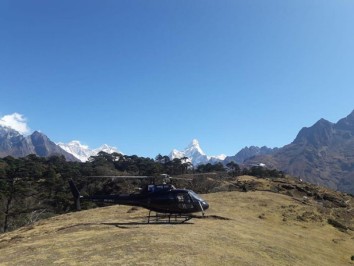
The day at Namche will be the day for exploration and acclimatization. Health expertise suggests acclimation is necessary to avoid Acute Mountain Sickness (AMS). On this day, the guides arrange short trek from Namche to other Sherpa settlements in the Khumjung valley. The short trip heads towards one of the world’s highest hotels in the world: the Everest view hotel for panoramic view of Mt. Khumbila (5,761m), Mt. Thamserku (6,623m), Mt. Everest (8,848m), Lhotse (8,516m) and AmaDablam (6,812m).The trail then climbs uphill to Khumjung where we visit Khumjung Gompa and Khumjung Hillary school established by Sir Edmund Hillary in 1961. After inspecting Khumjung Gompa and school, we drop down to another Sherpa village, Kunde whichis renowned for ‘Hillary hospital’: the largest hospital of Khumjung region established in 1966. The hike from Kunde to Namche lands at Syangboche airstrip on foot. Enjoy the breath-taking picturesque scenery of Namche village from the runway. Then, the trail follows the zigzag gravel path to Zarok and finally to Namche. Get refreshed at Namche and save energy for the remaining trek.

Food
Breakfast, Lunch & Dinner
Accomodation
Lodge
Elevation
3440
Day 6 : Namche (3,440m/11,285) to Tengboche (3,870m/12,696ft)

Spending one spare day and night at Namche, the trek to EBC resumes on day 6. From Namche, the trail strolls uphill for few hours through dense juniper forest and Sherpa village Kyangjuma until Sanasa. Sanasa is the juncture where the trail forks to Gokyo lake on left and Everest Base Camp on right. The trail afterward offers the glorious view of towering peaks Ama Dablam while descending down to the villages: Lawichasa and Tashinga via dense juniper forest. Hence, the trail steps downward to Phunki Thanga; a beautiful village which offers the magnificent view of clustered houses beside Dudh Koshi river, army barrack, hermitages, water driven prayer wheel and green hills under blue canopy. Marching through the dense rhododendron forest and suspension bridges for 2 hours from Phunki Thanga, you can reach at Tengboche. The village is famous for the largest Gompa (monastery) of this region, Tengboche Gompa. The Gompa is renovated several times after hit by earthquakes. Yet, this Gompa is still lively and perform longest festival of Khumbu region, Mani Rimdu festival in the month of October-November. It still holds the affection and faith of the national and international pilgrims. Enjoy the night at lodge in Tengboche.

Food
Breakfast, Lunch & Dinner
Accomodation
Lodge
Elevation
3870
Day 7 : Tengboche (3,870m/12,696ft) to Dengboche (4,410m/14,467)

On day 7, the trail continues from Tengboche and reaches at Debuche just after 15-20 minutes. Debuche Nunnery is the most visit place of the village for the spectacular glimpse of Thanka paintings, Mural paintings and architectural delicacy. The trail then traces towards the junction of Pangboche through the dense forest and suspension bridges over the surging Imja river. From here, trial follows the arid landscape and boulders with the closer view of erected Ama Dablam Peak (6856m) and finally comes across the flat trail ahead Orso. Walking uphill from Orso along Imja river offers the pristine view of the Himalayas which inspires trekkers to continue the journey to Dengbouche. For tourists, ‘The summer valley’, Dengbouche is the ideal stop for night stay and acclimatization.

Food
Breakfast, Lunch & Dinner
Accomodation
Lodge
Elevation
4410
Day 8 : Acclimatization and Exploration day at Dengboche

Acute Mountain Sickness (AMS) is a common risk to few trekkers while trekking above 4,000 meters in the Everest region. Health experts suggest to acclimatize at Dingboche before conquering Everest Base Camp trek. Hiking in Dengboche is the best way to enjoy the rest day, climate, landscape, tradition, in Chhukung valley. The sun appears late till evening and the breeze is soft, so the short excursion to Nangkar Tshang peak (5,616m) is awe-inspiring. On the way to Dengboche, Nangkar Tshang Gompa smiles at you. Observe the delicate art, buddhist statues, stupa before heading to Nangkar Tshang summit. The trail to Nangkar Tshang is steep uphill and demands extra physical stamina; but your struggle rewards you with the glistering sight of Island peak (6,189m), Thamserku (6623m), Ama Dablam (6,856m), Mt. Makalu (8,463m) along with other few peaks. After spending some time at top, the trail drops down to Dengboche. Enjoy the summer valley with warm food and cozy lodge.

Food
Breakfast, Lunch & Dinner
Accomodation
Lodge
Elevation
4410
Day 9 : Dingboche (4,410m/14,467) to Lobuche (4,910m/16,108)

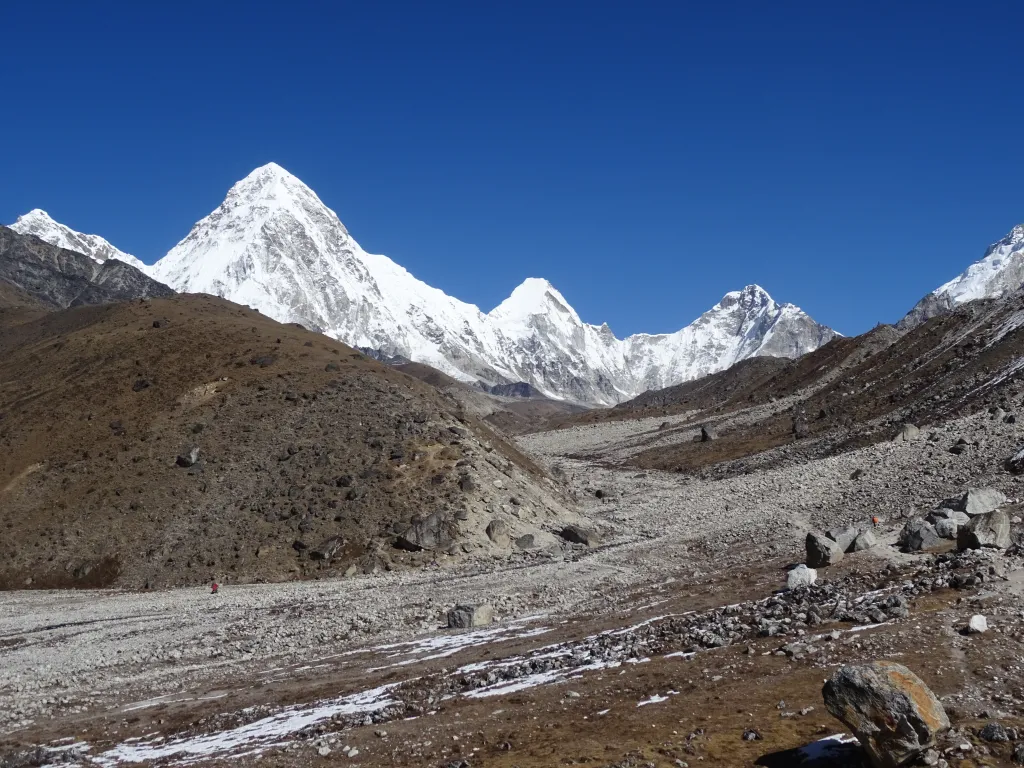
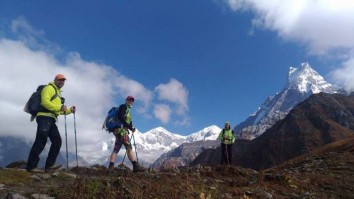
After delicate breakfast at Dengboche, the trail trials though rocky boulders to Dusa and inclines along the ridge to Dughla village. The ridge offers the fantastic view of countless peaks: Taboche (6,542m), Cholatse (6,440m), Ama Dablam (6,856m), Pumori (7,161m), Khumbutse (6,636) and Lhotse (8,516m) which makes the strenuous trail easy and painless. From Dughla, the trail traces along the moraine glacial formed by Khumbu glacial. On the way are many tea shops which are purposefully built to offer rest and closeup view of the Awi Peak (5,245m). Henceforth, the next stop Lobuche is just few minutes away. Overnight, stay at lodge at Lobuche.

Food
Breakfast, Lunch & Dinner
Accomodation
Lodge
Elevation
4910
Day 10 : Lobuche (4,910m/16,108ft) – Gorakshep (5,160m/16,928ft) - Everest Base Camp (5,364m/17,597ft) – Gorakshep

After today’s breakfast, we begin journey from Lobuche through narrow mountain gaps, glacial moraine alongside the world’s highest glacier, Khumbu glacier. After walking for 2-3 hours through rocky path, we get at the last human settlement, Gorakshep. The climate of the village is too cold as it is located at the elevation of 5,164 m. Gorakshep is the junction from where the path separates to Kalapatthar and EBC. At Gorakshep, we take rest for while, leave our extra baggage and luggage in hotel room and head towards EBC. The trail from Gorakshep to EBC is full of sand pit and boulders which makes the trek more strenuous. After couple of hours, we reach at the Base camp (5,364m). From Base Camp, we perceive Khumbu ice fall, Khumbu glacier, 360-degree Himalayan range, tranquil scenery of, sparkling view of Nuptse-Lhotse. Enjoy the view, celebrate your triumph, pose for the photo, take rest and get saturated before heading to Gorakshep. From EBC, we drop down to Gorakshep retracing the same route.

Food
Breakfast, Lunch & Dinner
Accomodation
Lodge
Elevation
5364
Day 11 : Gorakshep (5,160m/16,928ft) - Kalapatthar (5,550m/17,597ft) - Gorakshep to Lobuche (4,910m/16,108ft)

One of the highlights of the journey after EBC is side trip to Kala Patthar summit (5,644m). It almost takes 2-3 hours to reach at Kala Patthar from Gorakshep. We begin our trek before the dawn so that we can catch up glorious sunrise view, elegant scenery and the gleaming view of Mt. Everest (8848m) along with Lingtren (6,749m), Khumbutse (6,636m), Nuptse (7,861m), Pumori (7,161m) from the top of Kala Patthar summit. After spending some moment at the peak, we drop down to Gorakshep for breakfast. From Gorakshep, the journey from land of Himalayas descends the same route towards the Sherpa village Lobuche.

Food
Breakfast, Lunch & Dinner
Accomodation
Lodge
Elevation
4910
Day 12 : Lobuche (4,910m/16,108ft) to Lobuche Base Camp (4,865m/ 15,960ft)

Today’s trail is short but challenging. From Lobuche, we ascend through icy boulders and rocky rubbles along Lobuche glacier enjoying the pristine view of Ama Dablam, Cholatse, Thamserku, Kantega, and few other peaks. After few hours, we reach at Lobuche west Base Camp and take some rest for awhile and set up tent.

Food
Breakfast, Lunch & Dinner
Accomodation
Lodge
Elevation
4865
Day 13 : Base Camp (4,865m/ 15,960ft) to Lobuche High Camp (5,600m/ 18,371ft)

After having delicious breakfast made by our helpers, today we follow the slippery and steep path to reach at High Camp. It takes 3-4 hours of cautious walk to cross through the moraine path and reach High Camp. Once we reach at the High Camp, we take rest and give enough rest to our limbs and muscle. Our guides and porters set up tent for shelter and then we will have our lunch. After few hours, the guides will train us about: how to use the gears properly; when to ascend; how to ascend; climate; etc. Sleep early so that body gets plenty of rest for tomorrow’s expedition.

Food
Breakfast, Lunch & Dinner
Accomodation
Lodge
Elevation
5600
Day 14 : High Camp to Lobuche west summit (6,145m) and trek back to Base Camp

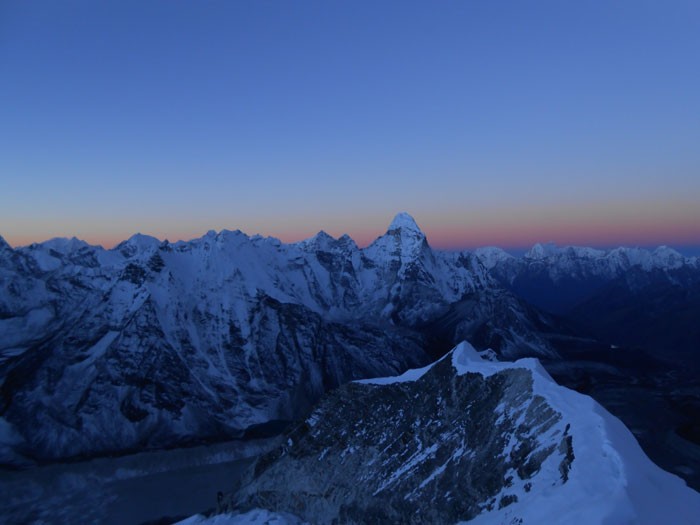
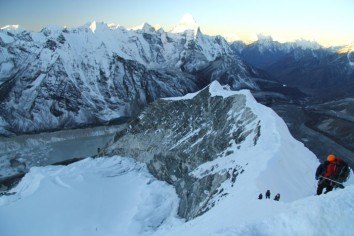
Today we wake up early in the morning for our expedition. We eat our breakfast which is made by our helpers and then commence our expedition at around 1-2 am. The west summit is technically more demanding; therefore, we need some precautions and have to follow the guidance of guides. Climbing the snow steep ridge make the expedition more risky. Always keep good presence of mind; use ropes and gears wisely and then land at the top of the peak. From the apex of the peak, tantalizing view of Mt. Everest, Nuptse, Lhotse, Ama Dablam, Cholatse, Pumori, Tawache, etc appear stupendous and exquisite. After spending some moment at the top, we descend down to Base Camp.

Food
Breakfast, Lunch & Dinner
Accomodation
Lodge
Elevation
4865
Day 15 : Lobuche (4,910m/16,206ft) to Pheriche (4,230m/13,877ft)

Today, we begin our journey to Dhugla after having delicate breakfast. From Lobuche, we follow the route of Dhugla village along tea houses, tombstones, Lobuche Kharkha. At Dhugla, the trail stops at a fork which leads to Dengboche or Perische. Following the route of Phulaji Kala village, we walk down to the wide valley, Perische. The village is famous for the elementary health camp that is run under Himalayan Rescue Association (HRA). The health camp provides emergency health service and education about AMS to the trekkers. Today, we stay at Perische.

Food
Breakfast, Lunch & Dinner
Accomodation
Lodge
Elevation
4230
Day 16 : Perische (4,371m/14,340ft) to Tengboche (3,860m/12,633ft)

After having refreshing breakfast, today’s trip descends from Perische to the village Tengboche. The trail continuously drops down to Orso via flat trail following the west bank of Imja river and then to Somare. Again, we descend down to Pangboche along imja khola and climbs up to Debuche and Tengboche. Walking through the dense and tall rhododendron forest and suspension bridges, we reach at Tengboche. The village has the largest sacred monastery of this region, Tengboche Gompa which performs longest Mani Rimdu festival in the month of October-November. Visit this Gompa and explore the cultural, religious and historical importance of the village.

Food
Breakfast, Lunch & Dinner
Accomodation
Lodge
Elevation
3860
Day 17 : Tengboche (3,870m/12,696ft) to Monjo (2,835m/9,300ft)

The trek commences after having delicious breakfast at Tengboche. The trail now drops down to Phunki Thenga crossing a suspension bridge from where the water driven prayer wheel appears magnificent. The trail from here is uphill downhill route to Sanasa, a fork from where the trial departs to Gokyo Lake, Khumjung Valley or Khyangjuma village. We descend towards Khyangjuma village until it landed at Namche Bazaar. From here, drop down to National Park headquarter then cross Larja bridge above Jhorsalle and reach at Monjo. Overnight, stay at Monjo.

Food
Breakfast, Lunch & Dinner
Accomodation
Lodge
Elevation
2835
Day 18 : Monjo (2,835m/9,300ft) to Lukla (2,845m/9,333ft)

In the early morning, the trek begins after crossing suspension bridges at Chhamuwa and one before Bengkar village. The trail afterward is steep and traces through dense rhododendron and Mongolia tree. We again descend along Dudh Koshi river through the Sherpa villages: Phakding, Nurning, Ghat, Thadokoshigaon, Cheplung and Thalsharoa. From the junction of Thalsharoa, we head towards Lukla for today’s cozy accommodation and delicious cuisine. Enjoy happy hour at Lukla by playing billiards, exploring the pubs or sipping beverages.

Food
Breakfast, Lunch & Dinner
Accomodation
Lodge
Elevation
2845
Day 19 : Lukla (2,845m/9,333ft) to Kathmandu(1,300m/4,265ft) flight

The trek concludes after 30-40 minutes scenic flight from Lukla to Kathmandu. Shift your seat to opposing direction than your previous flight for the overall view of daunting landscape. After landing at TIA, you will be transferred to your respective hotel. Shower your soaked body with warm water, arrange your luggage and check your passport, tickets and other important belongings before final departure.

Food
Breakfast, Lunch & Dinner
Accomodation
Hotel
Elevation
1300
Day 20 : Buffer day

Mountaineering and trekking both are challenging. Beside technical knowledge and physical fitness, we must be favored by climate too for 100% successful expedition. The climate of the Himalayas is unusual and fluctuates at any time or in any season which may obstruct expedition or cancel the flight; therefore we request you to add some buffer days in schedule. The buffer day is scheduled to avoid any unforeseen circumstances as well as to give some rest to tired limb and muscle after long and challenging expedition. The buffer day is optional for you: If the trek goes as planned then we don’t need this spare day.

Food
Breakfast
Accomodation
Hotel
Elevation
1300
Day 21 : Departure:

This day is marked as departure day. After delicate breakfast, check out your room at 12pm and transfer to Tribhuvan International airport for departure flight.

Food
Breakfast

What Is Included ?

  • Airport transfers, welcome upon arrival and departure after completion of trips.
  • Comfortable, private transportation as per itinerary
  • Quality accommodation on lodge or tent as per itinerary.
  • 3 star Hotel in Kathmandu with breakfast basis
  • All meals and hot drinks on activity while you are on trekking and climbing
  • First Aid and Eco trained English Speaking guide as per itinerary for both tours & treks
  • One porter, one Sherpa for each two people and one trek leader on each trip. Sherpa acts as a assistant guide to help each individuals while on trek
  • Trekking /climbing equipment for porters and guides
  • Experienced and friendly trekking staffs
  • Staffs insurance, well paid salary, high altitudes equipments, flight, foods and accommodations
  • Climbing permits as per itinerary describes.
  • Sagarmatha National Park entry permit.
  • Rescue Arrangements off course not the rescue bills! (Please arrange your health and evacuation insurance before you book the trip.)
  • High quality tents, mattress, pillows, kitchen equipments for camping trek
  • Medical Kit Bag on every trip

What Is Excluded?

  • Lunch and Dinner in Kathmandu.
  • Excess baggage charges.
  • Personal trekking and climbing equipments.
  • Travel, trek and expedition medical and evacuation insurance;
  • Personal expenses (e.g. phone calls, hot shower, laundry, alcohol, soft drinks and bottle water during the trek souvenirs, etc.)
  • Tips for the staffs
  • Any loss due to unforeseen circumstances such as flight delays, etc the over come expenses need to take care trekkers themselves.

Altitude Graph

FAQs

What is the Lobuche Peak climbing itinerary and duration?

Lobuche Peak Climbing is a 21-day trek combining Everest Base Camp trekking with the summit of Lobuche West (6,145m/20,160ft), including acclimatization days at Namche, Dingboche, and Gorakshep.

What is the difficulty level of Lobuche Peak?

Lobuche West is classified as a challenging high-altitude climb, suitable for experienced trekkers or climbers with prior trekking experience above 5,000m.

How much trekking and climbing is involved daily?

Daily trekking ranges from 3 km to 14 km, with 3–9 hours of walking, depending on altitude and terrain. Summit day is the longest, around 8–10 hours.

When is the best season to climb Lobuche Peak?

The ideal times are pre-monsoon (March–May) and post-monsoon (September–November) for clear skies, stable weather, and excellent mountain views.

Do I need prior climbing experience?

Basic trekking experience above 4,000m is recommended, but guides and climbing staff provide technical support for the summit.

What permits are required for Lobuche Peak?

Trekking requires a Sagarmatha National Park permit, a Khumbu region TIMS card, and a Lobuche climbing permit from the Nepal government.

What kind of accommodation is provided?

Accommodation includes hotels in Kathmandu, teahouses along the trail, and high camps near Lobuche Base and High Camp, with blankets, twin beds, and shared dining facilities.

What meals are provided during the trek?

Meals are freshly prepared at lodges with Nepali, Tibetan, and Western options. Summit and high-camp days include hot soups, energy snacks, and high-calorie meals.

Is altitude sickness a concern on Lobuche Peak?

Yes, altitude sickness can occur above 4,000m. Acclimatization days at Namche, Dingboche, and Gorakshep help reduce risks. Guides monitor all climbers closely.

What is included in the climbing logistics?

The package covers experienced guides, porters, camping gear, kitchen staff, safety equipment, permits, transportation, and emergency support.

What equipment and clothing do I need?

Trekking and climbing gear include insulated jackets, climbing boots, crampons, harness, helmet, gloves, and layered clothing for extreme cold at high altitude.

How physically fit should I be?

A good level of fitness is required, including stamina for long trekking days, steep ascents, and summit climbing at high altitude.

Can beginners attempt Lobuche Peak?

Beginners with high-altitude trekking experience and proper training can attempt it, but guided supervision is mandatory.

How safe is the climb?

With professional guides, climbing equipment, and emergency plans, Lobuche Peak is safe. Summit day requires careful monitoring of weather and climber health.

What are the highlights of Lobuche Peak Climbing?
  • Summit views of Everest, Lhotse, Nuptse, and Ama Dablam

  • Classic Everest Base Camp trekking route

  • Sherpa culture, monasteries, and Himalayan landscapes

  • High-altitude adventure with professional climbing support

Can Lobuche Peak be combined with Everest Base Camp Trek?

Yes, the trek combines EBC trekking with the summit of Lobuche, offering a full Himalayan adventure with breathtaking views and cultural experiences.

Is travel insurance required?

Yes, travel insurance covering high-altitude trekking, evacuation, and medical emergencies is strongly recommended.

How do I reach Lobuche Peak starting point?

Fly from Kathmandu to Lukla and trek through Phakding, Namche, Tengboche, and Dingboche to reach Lobuche Base Camp.

Additional Information

Meals During Lobuche Peak Climbing

  • Nutritious full-board meals (breakfast, lunch, and dinner) throughout the Lobuche Peak Climbing itinerary

  • Meals served at trekking lodges (teahouses) during the Everest region trek and high-altitude camping meals during summit days

  • High-energy trekking meals including Tibetan bread, eggs, porridge, pancakes, rice, noodles, pasta, soups, dal bhat, and seasonal vegetables

  • Summit-day climbing meals prepared by professional climbing staff, including energy bars, soups, hot drinks, and packed lunches

  • Special meal requests available for vegetarian, vegan, and special dietary needs on request

  • Safe boiled drinking water and hot beverages provided during trekking and climbing days


Accommodation During Lobuche Peak Climbing

  • Comfortable luxury and standard teahouse accommodation in Kathmandu and along the Everest Base Camp trekking route

  • Twin-sharing rooms with warm bedding in Namche Bazaar, Dingboche, Lobuche, and other trekking villages

  • High-altitude tented camp accommodation at Lobuche Base Camp and High Camp, equipped with quality sleeping tents and dining tents

  • Hotels in Kathmandu include comfortable, well-located accommodations for pre- and post-climb stays

  • Clean and safe lodging designed to support proper rest and acclimatization before the Lobuche Peak summit attempt


Logistics & Transportation

  • All ground transportation in Nepal as per the Lobuche Peak Climbing package itinerary

  • Domestic flight between Kathmandu and Lukla, including airport transfers

  • Porter and professional Sherpa guide support for carrying climbing gear and personal equipment

  • Organized climbing permits, TIMS card, Sagarmatha National Park permit, and peak climbing permit

  • Group equipment including tents, kitchen gear, cooking equipment, ropes, ice screws, ladders, and safety gear

  • Emergency communication systems and evacuation coordination if required


Professional Support & Safety Management

  • Government-licensed experienced Lobuche Peak climbing guides and Sherpa team

  • Daily altitude acclimatization planning and health monitoring

  • Strong focus on safety, weather conditions, and summit success strategy

  • Oxygen, first-aid kits, and emergency response protocols available

  • Ethical and responsible mountaineering practices followed throughout the expedition

Please, read MMT’s ‘Terms and Conditions’ carefully prior to trip booking

Trekking or Mountaineering in the higher elevation of the Himalayas is one of the most adventurous endeavors which inherit the risk of AMS or injuries or even death. MMT is always concern regarding the comfort, safety and health of trekkers while meandering in higher altitude. We contribute great effort to reduce or control the risk and hazard; but sometime nature’s curse or fluctuate climate in Himalayas is beyond our control and we are not responsible for it.

If you are a keen adventure lover and are ready to follow the hereby mentioned Terms and Conditions then you are heartily welcome at MMT office, Kaldhara-marg, Paknajol, Thamel, Kathmandu, Nepal.

BOOKING TERMS AND CONDITIONS:

1. All the bookings of the packages are dealt with Mountain Mart Treks and Expedition which is an authorized adventure company based in capital of Nepal: Kathmandu.

2. The term ‘Trip’ formally refers to walking, sightseeing, treks, tours, mountaineering, expeditions or holiday in the mystical land, Nepal.

3. MMT faithfully offers all the amenities in the estimated price of the package.

4. Please go through itinerary page or trek inclusion page for the detail information of the cost transparency. The trek cost may vary from one package to another and some packages don’t include the cost of the following:

  • Personal travel insurance, medical assistance and helicopter evacuation.
  • Visa, Passport and transit point expenses.
  •  Extra meals, entertainment activities, accommodation, transportation costs are not included in the itinerary.
  • Laundry, postal, medicine, clothing, gears and personal expenses.
  • Tips and excess baggage charge.

5. The travelers must pay 20% upfront out of the total trip cost for the trip conformation.

6. You can pay the booking conformation amount either by credit card and wire transfer, both payment option subject to charge additional bank service fees upto 4% on top of the sum.

7. The trip will be booked once the payment is made by the travelers. We will send you the conformation letter through online and assure to provide all the service detail as mentioned in the itinerary.

8. The final payment must be submitted at the MMT office before the tip departure. Otherwise, you will not be legitimate for trip and no final documentation will be disclosed before the payment.

09. Regarding trip cancellation, we entertain free trip cancellation service upon submission of trustable reason before 90 days of the departure date upon adequate evidence and written reasons.    

10. If you cancel the trip 60 days prior to the departure date then 75% cancellation fee will be levied from the booking amount.

11. 85% cancellation fee will be levied if you cancel the trip before 30 days of the trip departure date.

12. The company will be unable to refund the earlier paid (20%) booking payment if you cancel the trek prior to 15 days of the departure date.

13. There will be no payment refund if you voluntarily leave or cancel the trip once it is started; but if you are forced to leave due to unforeseen immediate circumstances then payment can be refunded after proper discretion.

14. We guarantee your safe and successful trip; however, the company reserves the authority to cancel the trip if there will be no minimum number (2) of travelers. In this condition, company will postpone or manage alternative trip.

15. If the company cancels the trip due to any unforeseen circumstances which are beyond our control (i.e. natural disaster, flight cancellation, strikes, wars, riots, quarantine, government intervention policy, weather condition), we will refund after deduction of minimum operating cost involved.

16. If you want to change your booking date, the booking amendment request must be made 90 days prior to the original trip departure.

17. If trekkers demand to change the departure date prior to 60 days of the final departure, US $ 50.00 per person will be charged as cancelation fee. The charge of the trip may also be increased if the market price soars higher during the postponed trip date.

18. The policy of our company is: Trekkers must have insurance policy contract if they want to trek with MMT. The policy must feature: medical coverage, air ambulance, helicopter evacuation facility, as well as flight cancellation insurance if possible.

19. Mountain Mart Treks and Expedition organizes various adventurous trips which have high risk factor and demand more physical stamina plus training. If you can’t accomplish the trek due to your physical inability or sickness, we are not obliged to refund the payment.

20. There may appear hindrance, obstacles or circumstances like: political riot, insurgency, accident, climate change, or natural disasters during the course of trip. Make sure you are ready to deal with all these problems.

21. The trip route, accommodation, modes of transport may be changed without prior notice due to the unforeseen circumstances. It is for your convenience and safety, so hope you will display flexible human nature in this context.

22. While changing the route, transportation, accommodation, or itinerary due to above circumstances, we may charge additional cost or lessen the cost as per the total expenses of the entire trek.

23. MMT holds all the authority to decline, accept, detain or retain any members of the trip if we find anyone suspicious or indiscipline. If you want to trek with MMT, you must accept our leadership during the whole trip.

24. MMT has contracted with network of companies, government of Nepal, individuals to assist the travelers during the trip. These third parties are qualified to perform their duties as contracted. We are not liable in case of loss, damage, irregularities if the third parties don’t perform their duties properly.

25. MMT is not responsible for the violation of any law or rules committed by the travelers in any country.

26. This agreement is governed by the laws of the Government of Nepal. No any individual: employees, representatives, guides of the company can alter the terms and conditions.

27. These terms and conditions may only be waived in special circumstances with written application to the director. Only the director of the company has all the right to amend them.

28. Travelers must be physically and mentally fit for the trekking. It is compulsory to bring health certificates along with proper legal documents for trip approval, if asked.

29. If the flight is cancelled or get delayed due to fluctuate climate or any other causes, MMT is not responsible for the extra expenses or compensation. We can manage alternative arrangement on special request which may demand other extra cost.

30. We have displayed the authentic, genuine and accurate information on our official website and brochure. If any mistake, incomplete or wrong information is seen, please inform us on time.

31. Please read all the above mentioned ‘Terms and Conditions’ before making the bookings. You must abide these conditions if you fancy to trek in the Himalayas with Mountain Mart Treks (MMT)

Download Nepal VISA form (.pdf)

Foreigners other than Indian citizen, who intend to visit Nepal must hold a valid passport prior to applying for a Nepal visa. The passport must have six months validity from the date of arrival. Foreigners can obtain a Nepalese visa upon arrival at Kathmandu airport, or at a border immigration office. One recent copy of a passport size color photo is required to apply for Tourist Visa to Nepal. Mountain Mart Trek has listed Nepal visa information tips for travelers to Nepal.

Tourist visas shall be granted for a maximum period of 150 days in a visa year (January to December)

A foreigner who has departed before the expiry of the period specified in the visa issued in a visa year shall not be allowed to use the visa by adding the remaining period to another visa year. If any foreigner who has entered Nepal towards the end of a visa year desires to extend his/her stay into the new visa year, he/she may do so by purchasing another visa for the New Year. Provided, however, that the computation of the fees for such period shall be made on the basis of the total period of the stay.

An application for a Tourist Visa must be submitted in the format referred to in Appendix 1.

A Nepali visa issued abroad is valid for entry for three to six months from the date of issue. True -

Tourist Visa Exceptions

Citizens of the following countries should be issue visa in their own country to Nepal embassy and consulate.

Afghanistan, Cameroon, Ethiopia, Ghana, Iraq, Liberia, Nigeria, Palestine, Somalia, Zimbabwe.

Entry

No foreigners except Indians are entitled to Nepal without a valid visa.

Visas can be obtained from the following immigration offices in Nepal:

  • Tribhuvan International Airport, Kathmandu
  • Kakarvitta, Jhapa (Eastern Nepal)
  • Birganj, Parsa (Central Nepal)
  • Kodari, Sindhupalchowk (Northern Border)
  • Belhiya, Bhairahawa (Rupandehi, Western Nepal)
  • Jamuna, Nepalgunj (Banke, Mid Western Nepal)
  • Mohana, Dhangadhi (Kailali, Far Western Nepal)
  • Gaddachauki, Mahendranagar (Kanchanpur, Far Western Nepal)

Visa Application Forms

A copy of the Visa Form is available for use at the end of this document that avoids you long queue to pick up the Nepal visa form at the international airport.

Visa Fees

The fees payable only in USD dollars for obtaining a visa on arrival at any border are as follows:

  1. A Tourist Visa with Multiple Entry for 15 days: US$ 25 payable only in USD dollars.
  2. A Tourist Visa with Multiple Entry for 30 days: US$ 40 payable only in USD dollars
  3. A Tourist Visa with Multiple Entry for 90 days: US$ 100 payable only in USD dollars
  4. Regardless of the provisions stated in points E1 and E2 above: Tourists with passports from South Asian
    Association for Regional Cooperation (SAARC) countries (Bangladesh, Bhutan, India, Maldives, Pakistan
    and Sri Lanka) are not required to pay visa fees for a 30 day visa.
  5. Indian citizens do not require a visa to enter into Nepal.

Visa Extension Fees

The fees payable (only in local Nepali currency) to extend the duration of your stay, or to renew a visa are:

  1. US$ 2 equivalent, in Nepali currency, per day of the extension period.
  2. An additional US$ 20 or equivalent, in Nepali currency, is payable on a single-entry visa in F1 if a MultipleEntry facility is requested for the extended period.
  3. If foreign visitors failed to renew their visa and need to do so at an exit point, they have to pay an additional equivalent to US$ 3, in Nepalese currency, on the regular visa extension fee.
  4. Foreign visitors who have overstayed their visa period of 150 days without extension are required to pay an additional visa fee as per provision in F3, plus a fine as specified in Clause 10 sun-clause 4 of the immigration Act 2049.
  5. Regardless of the provision stated in F1: 15 days is counted as a minimum extension period and the visa fee is charged accordingly. For an extension period of more than 15 days, the visa fee is charged as per the provision of F1.
  6. A tourist visa can be extended for up to a maximum period of 150 days in a single visa year (Jan. – Dec.).
    It is cheaper to purchase a 30 day visa at the point of entry and then to extend it, for 15 days or more at the Central Immigration Office in Kathmandu or Pokhara unless you are staying for 90 days or more

    For an extension to a visa you will need two additional passport photographs for each extension.

Transit Visa

A transit visa for one day can be obtained from Nepal's immigration offices at an entry point upon the production of a departure flight ticket via Tribhuvan International Airport in Kathmandu. The fee is US$ 5 or equivalent convertible currency. A transit visa may not be extended.

A Nepali Visa can be obtained from Nepal Embassy / Consulate Offices in your country, or upon arrival at Kathmandu airport. It is also possible to obtain the visa from other border points of entry. You'll need 1 passport photo each time.

For foreign investors, a business visa with a multiple entry facility for a period of one year or five years can be obtained from the Department of Immigration on the recommendation of the Department of Industry and Commerce by paying US$ 100 and US$ 250 or equivalent convertible foreign or Nepali currency.

Note: While we try to make the information contained herein as accurate as possible, we accept no responsibility for any loss, disruption or inconvenience sustained by anyone using this information.

Important Information to Visitors

Foreign visitors are requested to keep a note of the dates on their Nepalese visa and their passport number to avoid possible problems. Visa extensions need to be applied for, within the valid period of the Nepalese visa.

You are requested to ensure that you get the arrival/departure stamps on your passport at the entry /exit points to avoid possible legal complications.

Living in Nepal without a passport or a valid visa is a punishable offence.

Deviation from the prescribed trekking routes mentioned on your trekking permit will be treated as a violation of the law.

You are advised to be aware of brokers/cheaters and counterfeit documents or visa/trekking permits to avoid legal complications.

Change of purpose of your stay without permission is not allowed and employment or voluntary services while on a tourist visa is strictly prohibited. It will be a punishable offence.

Be certain to register at the police and Immigration check points along any trail. It would be wise to register your trekking destination and schedule at your Embassy or Consulate.

If you encounter problems along the trails, immediately inform the nearest police or Immigration post officials.

You are requested to change money with recognized dealers and do not forget to take and keep formal receipts.

You are requested to inform the officials at an Immigration Office or Police Station of any changes in the address previously given in your visa application form or disembarkation card, and within seven days.

If, as a tourist, your stay is more than 120 days in one visa year and you wish to visit additional places for longer than 24 hours, you must register at the local police office of such places, your name, passport number and address.

You are advised to be mindful to contact the Department of Immigration to request a visa transfer in the case of getting a new passport or travel document from your embassy, and within seven days.

Passport and trekking permits should be kept by each trekker while trekking.

Filming in restricted or notified areas without permission is strictly prohibited.

Please do not take out the visa stickers from your passport and do not try to change records printed in your passport.

We request your co-operation in observing the following guidelines during your stay in Nepal. Respect local traditions, customs, values and sentiments, help to protect local culture and maintain local pride.

  1. Respect privacy while taking photographs.
  2. Respect holy places.
  3. Refrain from giving money to children as it will encourage begging.
  4. Respecting local etiquette will earn you respect.
    Let the Himalayas change you – do not change them: so remember while you are on trekking:
  5. Leave campsites cleaner than you have found them.
  6. Do not light open fires.
  7. Burn dry papers and packets in a safe place.
  8. Keep local water clean and avoid using pollutants.
  9. Plants should be left to flourish in their natural environment.
  10. Help your guides and porters to follow conservation measures.
  11. Protect the natural environment.

Information for Indian Citizens

Indian citizens are permitted to travel in Nepal provided they have any one of the following documents:

Passport; Driving license with photograph; Identity card with photograph issued by a governmental body; Ration card with photograph; Voter identity card with photograph; Registration certificate issued by the Indian embassy to Indian citizens residing in Nepal; Ad hoc/temporary identity cards issued by the Indian embassy to the Indian citizen in the event of exigency; Document with photograph and setting out identity, issued by the sub-divisional magistrate or authority there above.

General Information

Department of Immigration
Kalikasthan, Dillibazar, Kathmandu.
Tel : 977 - 01 - 4433934 / 4429660 / 4438862 / 4438868
Fax : 977 - 01 - 4433935
Email : mail@nepalimmigration.gov.np
Web : http://nepalimmigration.gov.np/

Office Hours

Sunday to Thursday 10:30 a.m. - 17:00 p.m. in Summer
  10:30 a.m. - 16:00 p.m. in Winter (Nov. to Jan.)
Friday 10:30 a.m. -15:00 p.m.

Visa Application Hours

Sunday to Thursday 10:30 a.m. - 15:00 p.m.
Friday 10:30 a.m. - 13:00 p.m.

Note: All of the information above is based on information from the Department of Immigration of Nepal’s office and may be found on their website.

Trekking cards and Permits for Conservation Areas, National Parks and Restricted Areas

All trekkers are required to carry a Trekkers' Information Management System card (TIMS card). It is available from the Tourist Services Centre in Kathmandu: Sun – Fri 10:00 – 13:00 and 14:00 – 17:00. It is free, but requires two passport photographs. (Trekking agencies provide the cards for their clients.) Show it at check points on trekking routes.

Trekking Permits are required for all treks that pass through Conservation Areas or National Parks.

Conservation Area permits can be purchased at the Tourist Services Centre for Rs 2000 plus two photographs.

National Park entry tickets cost Rs 3000 and require no photograph. Purchase at the Department of National Parks and Wildlife Conservation office Sun – Fri 09:00 – 14:00 only (next to the Tourist Services office).

Restricted Area Permits are required mainly for camping style trekking in remote areas near the Tibetan border – for which a guide is strongly recommended. They can only be purchased for two or more trekkers. The permits are issued by the Central Immigration Office, require two working days, your original passports (not facsimiles) and two photographs. Costs range from US$10/week to US$500/10 days plus substantial additional amounts for each additional day. These will be procured by your chosen trekking agency. Offices are open daily, but with restricted hours on Saturdays.

Tourist Visa

The foreign tourist visiting Nepal shall be granted the tourist visa.

The tourist visa shall be granted for a period in maximum of 150 days in a visa year (Visa years means January to December).

A tourist who has departed before the expiry of the period specified in the visa issued in a visa year shall not be allowed to use the visa by adding the remaining period to another visa year.

If any foreigner who has entered into Nepal towards the end of a visa year desires to spend even the period during which he may stay in Nepal with the tourist visa of the other visa year, he may use such facility.

Provided, however, that the computation of the fees for such period shall be made on the basis of the total period of his stay.

Note: Above information is based on Department of Immigration of Nepal office.

Essential Trekking Clothing

  • Lightweight moisture-wicking trekking shirts (base layers)

  • Warm fleece or softshell jacket for Everest region trekking

  • Insulated down jacket (expedition grade) for Lobuche Peak summit days

  • Trekking pants and thermal trousers for cold mornings and evenings

  • Waterproof & windproof hard shell jacket and pants (Gore-Tex recommended)

  • Comfortable trekking underwear and socks (wool or thermal)

  • Warm hat, sun hat, neck gaiter or buff

Footwear for Lobuche Peak Climbing

  • High-quality mountaineering boots (crampon-compatible) for summit push

  • Comfortable trekking boots with strong ankle support

  • Lightweight camp shoes or sandals for teahouses and base camp

  • Gaiters for snow and ice protection during high-altitude climbing

Technical Climbing Gear (Required for Lobuche Peak Summit)

  • Climbing harness (UIAA certified)

  • Crampons suitable for ice and mixed terrain

  • Ice axe (standard mountaineering type)

  • Ascender (Jumar), descender, and carabiners (locking & non-locking)

  • Climbing helmet for safety on steep and icy sections

  • Prusik cords and slings for fixed rope sections

  • Mountaineering gloves (inner + insulated outer gloves)

(Most technical climbing gear can be rented in Kathmandu if needed.)

Backpacks & Storage

  • 60–70L trekking backpack or duffel bag (carried by porter)

  • 25–35L daypack for daily trekking and summit day essentials

  • Waterproof dry bags or packing cubes for organization

Personal & Safety Equipment

  • High-UV mountaineering sunglasses or glacier goggles

  • Headlamp with extra batteries (essential for summit night)

  • Trekking poles for stability during ascent and descent

  • Sleeping bag (rated –15°C to –20°C) for high-altitude camps

  • Reusable water bottles and/or hydration bladder

  • Water purification tablets or filter

Personal Care & Health Items

  • High-altitude sunscreen (SPF 40+) and lip balm

  • Basic personal toiletries (eco-friendly preferred)

  • Personal first-aid kit (medications, blister care, pain relief)

  • Diamox or altitude medication (consult doctor before use)

  • Wet wipes and hand sanitizer

Documents & Travel Essentials

  • Valid passport and visa

  • Multiple passport-size photos

  • Travel insurance covering high-altitude climbing and emergency evacuation

  • Copies of important documents (digital and printed)

Lobuche Peak Climbing Difficulty Level

  • Lobuche Peak (6,119m / 20,075ft) is considered a moderately difficult trekking peak in Nepal, suitable for fit trekkers with some mountaineering interest

  • Classified as a technical trekking peak due to steep snow slopes, icy ridges, and fixed rope sections near the summit

  • Requires basic mountaineering skills such as using crampons, ice axe, harness, and ascending fixed ropes

  • Summit day is physically demanding, involving early morning starts and sustained climbing at high altitude

  • High altitude and cold temperatures add to the challenge, making proper acclimatization essential

  • No prior 6,000m peak experience is mandatory, but previous high-altitude trekking experience is strongly recommended

Physical Fitness Requirements

  • Strong cardiovascular endurance for long trekking days (5–7 hours)

  • Good leg strength for uphill and downhill trekking

  • Ability to hike comfortably at altitude above 5,000 meters

  • Mental resilience to handle cold, fatigue, and summit pressure

Training Tips for Lobuche Peak Climbing

  • Start training at least 8–10 weeks before the expedition

  • Focus on cardio workouts: hiking, running, cycling, stair climbing

  • Build leg strength with squats, lunges, step-ups, and hill training

  • Practice hiking with a loaded backpack (10–15 kg)

  • Include endurance hikes on consecutive days to simulate trekking conditions

  • Improve flexibility and balance with yoga or stretching routines

Basic Mountaineering Skills to Practice

  • Walking in crampons on snow and ice

  • Proper use of ice axe for balance and self-arrest

  • Using a climbing harness and safety knots

  • Ascending and descending fixed ropes using a jumar

  • Learning glacier travel basics (guided on the expedition)

Why Lobuche Peak Is a Perfect Challenge

  • Ideal step between Everest Base Camp Trek and higher technical peaks

  • One of the best training peaks in Nepal for future 7,000m or 8,000m expeditions

  • Guided by professional Sherpa climbing guides, increasing safety and summit success

  • Balanced combination of trekking adventure and technical climbing experience

Lobuche Peak Climbing Altitude Profile

  • Kathmandu – 1,300m / 4,265ft (arrival & preparation)

  • Lukla – 2,845m / 9,333ft (start of Everest region trek)

  • Namche Bazaar – 3,440m / 11,286ft (key acclimatization hub)

  • Dingboche – 4,410m / 14,470ft (second acclimatization point)

  • Lobuche Village – 4,940m / 16,210ft

  • Lobuche High Camp – 5,400–5,500m / 17,716–18,045ft

  • Lobuche Peak Summit – 6,119m / 20,075ft

(Altitude gain is gradual and carefully planned to ensure safe Lobuche Peak Climbing.)

Acclimatization Plan for Lobuche Peak Climbing

  • Carefully designed itinerary following the “climb high, sleep low” principle

  • 2 acclimatization days in the Everest region (Namche Bazaar & Dingboche)

  • Acclimatization hikes to higher viewpoints and return to sleep lower

  • Slow ascent pace with regular hydration breaks

  • Rest and training session at Lobuche Base Camp / High Camp

  • Continuous health monitoring by experienced Sherpa climbing guides

  • Flexible itinerary to adjust for weather or acclimatization needs

Altitude Safety & Health Tips

  • Ascend slowly to reduce risk of Acute Mountain Sickness (AMS)

  • Drink 3–4 liters of water daily at high altitude

  • Avoid alcohol and smoking during the trek and climb

  • Eat high-energy, carbohydrate-rich meals

  • Inform your guide immediately if experiencing symptoms like headache, nausea, dizziness, or fatigue

  • Optional use of Diamox (consult your doctor) for altitude prevention

  • Oxygen support available in case of emergency

  • Emergency helicopter evacuation arranged if required

Summit Day Safety Measures

  • Early alpine start (midnight–2 AM) for stable snow and weather

  • Fixed ropes on steep and icy sections near the summit

  • Use of crampons, ice axe, harness, and helmet

  • Small climber-to-guide ratio for personalized attention

  • Constant weather and route condition monitoring

  • Turn-around time strictly followed for climber safety

Why Safety Matters on Lobuche Peak Climbing

  • Altitude and weather are the main challenges, not extreme technical difficulty

  • Proper acclimatization significantly increases summit success rate

  • Guided by certified Sherpa climbing guides with Everest experience

  • Well-planned safety procedures ensure a safe, enjoyable, and successful Lobuche Peak expedition

To confirm your Lobuche Peak Climbing adventure in the Everest region, we follow a simple, transparent, and traveler-focused booking system designed to make your Himalayan expedition smooth, secure, and stress-free.


Booking Confirmation Policy

  • Advance booking is highly recommended, especially during peak trekking seasons — spring (March–May) and autumn (September–November)

  • A 30%–40% deposit is required to secure climbing permits, professional guides, accommodation, and expedition logistics

  • Your trip is officially confirmed once the deposit is received along with required documents (passport copy & travel details)

  • Last-minute bookings are accepted based on permit availability and operational feasibility


Payment Terms & Accepted Methods

  • The remaining trip balance is payable upon arrival in Kathmandu (before the expedition begins)

  • We accept the following payment options:

    • Bank transfer (international or local)

    • Cash payment (USD, EUR, or NPR)

    • Online transfer (where available)


Cancellation & Refund Policy

  • Cancellations made 30 days before departure – partial refund available (administrative costs deducted)

  • Cancellations within 15 days of departure – deposit generally non-refundable

  • No refunds for trip interruption due to personal reasons, health issues, or weather conditions


Required Documents

  • Passport copy (minimum 6 months validity)

  • Recent passport-size photographs

  • Comprehensive travel insurance covering high-altitude trekking & peak climbing above 6,000m, including emergency evacuation


Why Book Lobuche Peak Climbing With a Local Expert?

  • Certified climbing guides & high-altitude trained support crew

  • All trekking permits & climbing permissions handled professionally

  • Transparent pricing with no hidden costs

  • Strong safety standards & high summit success rate

  • Personalized service from arrival to summit success


Booking your Lobuche Peak Climbing expedition in Nepal is easy, secure, and designed for your comfort — so you can focus on conquering one of the most iconic trekking peaks in the Everest Himalayas while enjoying breathtaking mountain scenery.

Lobuche Peak Climbing (6,119m) is one of Nepal’s most exciting trekking peak adventures, located in the heart of the Everest region. Combining high-altitude mountaineering with the legendary Everest Base Camp trekking route, this climb offers breathtaking Himalayan views, technical ice climbing sections, and a rewarding summit experience suitable for fit trekkers with basic climbing skills. From crossing glacial moraines to ascending snowy ridges with fixed ropes, Lobuche Peak provides a true Himalayan expedition feel with panoramic views of Everest, Lhotse, Nuptse, Ama Dablam, and Pumori.

This ultimate guide covers the best time to climb Lobuche Peak, weather conditions, difficulty level, and essential planning tips to help you prepare for a safe and successful summit.


Best Seasons for Lobuche Peak Climbing

Choosing the right season plays a major role in summit success and overall trekking enjoyment.

Spring Season (March – May) – Best for Summit Success

  • Stable weather and warmer temperatures

  • Excellent snow conditions for climbing

  • Clear mountain views and longer daylight hours

  • High success rate for reaching the summit

Most popular and recommended season


Autumn Season (September – November) – Crystal Clear Views

  • Dry trails and cool, comfortable temperatures

  • Outstanding Himalayan visibility

  • Ideal trekking conditions in the Everest region

  • Less snow compared to spring, making climbing easier

Second-best season for Lobuche Peak Climbing


Winter Season (December – February) – For Experienced Climbers Only

  • Extremely cold temperatures and heavy snowfall

  • Higher technical difficulty

  • Fewer crowds and dramatic alpine scenery

Recommended only for highly experienced mountaineers


Monsoon Season (June – August) – Not Recommended

  • Heavy rain, cloudy skies, and slippery trails

  • Poor mountain visibility

  • Increased risk of landslides and flight delays

Best avoided for safety and comfort


Weather & Temperature Overview

Season Daytime Temp Night Temp Climbing Conditions
Spring 5°C to 15°C -10°C to -5°C Excellent
Autumn 0°C to 12°C -12°C to -6°C Very Good
Winter -10°C to 0°C -20°C to -30°C Challenging
Monsoon 8°C to 18°C -5°C to -10°C Poor

Why Choose Lobuche Peak Climbing?

  • Iconic Everest region climbing experience

  • Stunning views of Everest, Lhotse, Nuptse & Ama Dablam

  • Perfect blend of trekking and mountaineering adventure

  • Suitable for adventurous beginners with proper training

  • High success rate with professional guides


Final Travel Tips

✔ Train with cardio, strength, and basic climbing skills before arrival
✔ Choose spring or autumn for the safest experience
✔ Book early during peak seasons
✔ Ensure proper travel insurance for high-altitude rescue


Lobuche Peak Climbing is the perfect Himalayan adventure for trekkers looking to step into the world of mountaineering while enjoying Nepal’s most famous trekking route. With the right season, preparation, and professional guidance, your summit journey will be unforgettable.

The Everest Base Camp Trek with Lobuche Peak Climbing – 2026 is the ultimate Himalayan adventure for international travelers seeking both iconic trekking and real mountaineering in Nepal. This unforgettable journey follows the legendary Everest trail through Sherpa villages, ancient monasteries, and dramatic glacial valleys before reaching the world-famous Everest Base Camp, then continues to the thrilling summit of Lobuche Peak (6,119m). Designed for adventurous trekkers from around the world, this combination trek and climb offers breathtaking views of Mount Everest, Lhotse, Nuptse, Ama Dablam, and Pumori while providing a true high-altitude climbing experience with professional guides and full logistical support.

Perfect for 2026 travelers looking for a once-in-a-lifetime Himalayan challenge, this expedition blends cultural immersion, scenic trekking, and technical alpine adventure into one seamless journey. With carefully planned acclimatization, modern safety standards, and locally experienced climbing teams, international visitors can confidently enjoy Nepal’s most famous trekking route while achieving a remarkable Himalayan summit. Whether you are an experienced trekker stepping into peak climbing or an adventurer chasing the ultimate Everest experience, the Everest Base Camp Trek with Lobuche Peak Climbing 2026 promises unmatched mountain scenery, personal achievement, and memories that last forever.

Trip Reviews (1)

testimonial image

Gabriella Nel

5th May, 2022

Private Lobuche climb and EBC trek
What an amazing trip! From Dolakh (owner) to my team Lochan, Dawa and Pemba it was an incredible experience. This team was safe and professional. I enjoyed every minute. Thank you so much! Can’t wait to come back again!


You can send your enquiry via the form below.

Day

22

  • Best price guaranteed
  • No booking fees
  • E-ticket/Mobile voucher

Response Time 3 Hours , Response Rate 100%

Similar Packages

Enjoy the popular trekking and tour packages in Nepal Himalayas. 2026.

Mardi Himal Base Camp Trek
12 Days

Mardi Himal Base Camp Trek

(5) 1 Review
Upper Dolpo Trek
24 Days

Upper Dolpo Trek

(5) 1 Review
Manaslu Tsum Valley Trek
24 Days
$1745 /Person

Manaslu Tsum Valley Trek

Kathmandu Day Tour
1 Day
$75 /Person

Kathmandu Day Tour

Namo Buddha Day Hiking Tour
1 Day
$110 /Person

Namo Buddha Day Hiking Tour

Bhaktapur Half Day Tour
1 Day
$70 /Person

Bhaktapur Half Day Tour

Nagarkot Sunrise Day Tour
1 Day
$120 /Person

Nagarkot Sunrise Day Tour

Nagarkot Sunset Day Tour
1 Day
$110 /Person

Nagarkot Sunset Day Tour

Nagarkot Day Hiking Tour
1 Day
$65 /Person

Nagarkot Day Hiking Tour

(5) 1 Review
Everest Base Camp Helicopter Tour
4 hours Days
$1395 /Person

Everest Base Camp Helicopter Tour

(5) 2 Reviews
Shivapuri Nagarkot Trek
6 Days
$575 /Person

Shivapuri Nagarkot Trek

Nepal Cultural Tour
6 Days

Nepal Cultural Tour

(5) 1 Review
Mera Peak Climbing
18 Days

Mera Peak Climbing

(5) 2 Reviews
Lobuche Peak Climbing
22 Days

Lobuche Peak Climbing

(5) 1 Review
Short Mardi Himal Trek
8 Days
$675 /Person

Short Mardi Himal Trek

Lobuche Peak Climbing - 22 Days

Lobuche Peak Climbing

Lobuche Peak Climbing – Trip Description

Lobuche Peak Climbing is a thrilling high-altitude adventure in the Everest region of Nepal, offering climbers the chance to summit at 6,145m/20,160ft while enjoying spectacular Himalayan panoramas. This expedition combines classic trekking through iconic destinations like Namche Bazaar, Tengboche, Dingboche, Gorakshep, and Everest Base Camp with a challenging peak climb, making it perfect for both experienced climbers and ambitious trekkers seeking their first Himalayan summit. The route features breathtaking views of Mount Everest, Lhotse, Nuptse, Ama Dablam, and Pumori, along with rich Sherpa culture, monasteries, and alpine landscapes. With professional guides, acclimatization stops, and well-organized logistics, the Lobuche Peak Climbing trek ensures a safe, rewarding, and unforgettable high-altitude adventure for adventure seekers and mountaineering enthusiasts.

Trip Overview

  • Best price guaranteed
  • No booking fees
  • 1 Review

Key Information

Trip Length

22 days

Activities

Trekking/Climbing

Difficulty

Strenuous

Max Elevation

6,119m/20074ft.

Meal

Breakfast/Lunch/Dinner

Accommodation

Hotel/Tent

Transportation

Flt KTM/LUA/KTM

Group Size

01 Min/12 Max

Lobuche Peak Climbing Trip Overview

Lobuche Peak consists of two summits: Lobuche East (6,119m) and Lobuche West (6,145m). In-comparison to Lobuche East, Lobuche West Peak is one of most challenging and technically demanding trekking peaks in the Everest Region. Lobuche West was recently opened for the expedition; so we have preferred West Peak to try something different than a usual trail. There are several routes to ascend the Lobuche West; however, we climb from the south ridge which is less risky than the other side. Lobuche Peak is known as expedition peak which is technically challenging and demands more physical fitness. We have tailored the trek after consulting with the experts.

Lobuche peak climbing commences with 30-40 minutes of scenic mountain flight from Kathmandu to Lukla. The journey then continues following the EBC, Gokyo Ri, and Everest Three Passes Trekking trails tracing through the villages: Namche, Pangboche, Dingboche, Lobuche, Gorakshep. Namche is the tourist hub of the Himalayas which serves all the guests with modern amenities. From Namche, we head towards Gokyo Valley which is famous for the sacred lakes, Ngozumpa glacier and pristine scenery of this region. From Gokyo valley, we head towards Gokyo Ri Peak (5,330m/ 17,483ft) which offers the stupendous view of numerous massif, glacier, and tranquil landscapes.

The journey first ascends to EBC before ascending Lobuche Peak. The Base Camp of the world’s highest Peak offers the pristine scenery, dazzling mountains, Khumbu ice-fall, and Khumbu glacier. One of the highlights of the trek is the Kala Patthar Summit which is a renowned vantage point for the spectacular view of Mt Everest, 360° Himalayan range and exquisite scenery. The journey from Lobuche Base Camp to Lobuche summit is challenging and strenuous. We use ropes, ice-axe, crampons while ascending the peak. The Sherpa guides are the ones who make your expedition successful; so always follow their instructions. Once we reach the top, we can see Mighty Everest, Tawache, Ama Dablam including several peaks of the Himalayan range.

MMT is one of the renowned trekking companies whose success rate is 99%. We tailor budget, time, AMS and eco-friendly packages with a suitable itinerary. The itinerary of the package is of 23 days and we arrange all the transport, permit, accommodation and gears throughout the trek; the well-experienced guides also provide training to use the gears. The best trekking seasons in Nepal are Spring and Autumn; so we request you to be more thoughtful while finalizing the packages. MMT is one of the leading authorized companies in Nepal and we guarantee to ensure your successful climb.

Lobuche Peak Climbing – Trip Highlights

  • Summit Lobuche Peak (6,145m/20,160ft) for an ultimate high-altitude climbing experience.
  • Trek through the classic Everest Base Camp route, including Namche Bazaar, Tengboche, Dingboche, Gorakshep, and Kalapatthar.
  • Enjoy breathtaking Himalayan panoramas of Everest, Lhotse, Nuptse, Ama Dablam, and Pumori.
  • Experience traditional Sherpa culture in villages, ancient monasteries, and local communities.
  • Trek through beautiful rhododendron forests, suspension bridges, and scenic valleys.
  • Professional guide and climbing support for safety and high-altitude trekking expertise.
  • Emphasis on acclimatization, high-altitude safety, and comfort throughout the trek.
  • Stay in teahouses, base camps, and high camps with well-planned meals and logistics.
  • Summit day offers unforgettable views of Khumbu Glacier and surrounding 8,000m peaks.
  • Scenic descent through Dingboche, Tengboche, and Lukla, combining adventure and culture.
  • Perfect for experienced trekkers, mountaineers, and adventure seekers.
  • Ideal for travelers seeking high-altitude adventure, Himalayan mountaineering, and Everest region trekking.

Lobuche Peak Climbing Itinerary

  • Day 01 Arrive Kathmandu (1,300m/4,265ft)
  • Day 02 City Excursion and Trek Preparation:
  • Day 03 Kathmandu (1,300m/4,265ft) to Lukla (2,845m/9,333ft) to Phakding (2,610m/8,562ft):  8km, 3-4 hrs.
  • Day 04 Phakding (2,610m/8,562ft)- Namche (3440 m/11,285ft):  11km, 6-7 hrs.
  • Day 05 Acclimatization and Exploration day:
  • Day 06 Namche (3,440m/11,285) to Tengboche (3,870m/12,696ft):  9km, 6-7 hrs.
  • Day 07 Tengboche (3,870m/12,696ft) to Dengboche (4,410m/14,467):  10km, 6-7 hrs.
  • Day 08  Acclimatization and Exploration day at Dengboche:
  • Day 09   Dingboche (4,410m/14,467) to Lobuche (4,910m/16,108ft):  7km, 5-6 hrs.
  • Day 10 Lobuche (4,910m/16,108ft) – Gorakshep (5,160m/16,928ft) - Everest Base Camp (5,364m/17,597ft) – Gorakshep;   14km, 8-9 hrs.
  • Day 11 Gorakshep (5,160m/16,928ft) - Kalapatthar (5,550m/18,207ft) - Gorakshep to Lobuche (4,910m/16,108ft):  9km, 5-6 hrs.
  • Day 12 Lobuche(4,910m/16,108ft) to Lobuche Base Camp (4,865m/ 15,960ft): 3km, 3-4 hrs.
  • Day 13 Base Camp (4,865m/ 15,960ft) to Lobuche High Camp (5,600m/ 18,371ft):  3-4 hrs.
  • Day 14  High Camp(5,600m/18,371ft)  to Lobuche west summit (6,145m/20,160ft) and trek back to Base Camp(4,865m/15,960ft) /lobuche(4,910m/16,108ft);  
  • Day 15 Lobuche (4,910m/16,108ft) to Pheriche (4,230m/13,877ft):  6km, 4-5 hrs.
  • Day 16 Perische (4,230m/13,877ft) to Tengboche (3,870m/12,696ft):  9km, 5-6 hrs.
  • Day 17 Tengboche (3,870m/12,696ft) to Monjo (2,835m/9,300ft):  14km, 6-7 hrs.
  • Day 18 Monjo (2,835m/9,300ft) to Lukla (2,845m/9,333ft):  14km, 5-6 hrs.
  • Day 19 Lukla (2,845m/9,333ft) to Kathmandu (1,300m/4,265ft) flight
  • Day 20 Buffer day to adverse KTM-LUA-KTM flight 
  • Day 21 Final departure 

Note: 

The above mentioned distance and duration are approximate; and it may vary from person to person or place to place. We have finalized about it after many researches and experts’ suggestion.

Due to the fluctuate climate and turbulent weather in the Himalayas, Kathmandu-Lukla or Lukla-Kathmandu flight may get delayed for one or two hours; or even cancel a day or more. We humbly request you to add few buffer days to avoid any unforeseen circumstances.

Lobuche Peak Climbing Itinerary Overview

Day 1 Arrival in Kathmandu
Day 2 City Excursion and Trek Preparation
Day 3 Kathmandu to Lukla (2,845m/9,333ft) to Phakding (2,610m/8,562ft)
Day 4 Phakding (2,610m/8,562ft)- Namche (3440 m/11,285ft)
Day 5 Acclimatization and Exploration day
Day 6 Namche (3,440m/11,285) to Tengboche (3,870m/12,696ft)
Day 7 Tengboche (3,870m/12,696ft) to Dengboche (4,410m/14,467)
Day 8 Acclimatization and Exploration day at Dengboche
Day 9 Dingboche (4,410m/14,467) to Lobuche (4,910m/16,108)
Day 10 Lobuche (4,910m/16,108ft) – Gorakshep (5,160m/16,928ft) - Everest Base Camp (5,364m/17,597ft) – Gorakshep
Day 11 Gorakshep (5,160m/16,928ft) - Kalapatthar (5,550m/17,597ft) - Gorakshep to Lobuche (4,910m/16,108ft)
Day 12 Lobuche (4,910m/16,108ft) to Lobuche Base Camp (4,865m/ 15,960ft)
Day 13 Base Camp (4,865m/ 15,960ft) to Lobuche High Camp (5,600m/ 18,371ft)
Day 14 High Camp to Lobuche west summit (6,145m) and trek back to Base Camp
Day 15 Lobuche (4,910m/16,206ft) to Pheriche (4,230m/13,877ft)
Day 16 Perische (4,371m/14,340ft) to Tengboche (3,860m/12,633ft)
Day 17 Tengboche (3,870m/12,696ft) to Monjo (2,835m/9,300ft)
Day 18 Monjo (2,835m/9,300ft) to Lukla (2,845m/9,333ft)
Day 19 Lukla (2,845m/9,333ft) to Kathmandu(1,300m/4,265ft) flight
Day 20 Buffer day
Day 21 Departure:

Lobuche Peak Climbing Itinerary Detail

Day 1 : Arrival in Kathmandu

After your safe landing at TIA, one of the representatives of MMT welcomes you at the Airport Terminal. Then, you will be taken to MMT office at Kaldhara and given all the further detail information about the trip. Eventually, the authorized person safely and comfortably takes you to the respective hotel. In the evening, you can enjoy the city night life in Thamel; main tourist hub in Kathmandu.

Food
Dinner
Accomodation
Hotel
Elevation
1300
Day 2 : City Excursion and Trek Preparation

City of Gods and Goddess, Kathmandu, is best known for sacred Hindus and Buddhist Shrines, art, culture and tradition. This day is scheduled to visit the UNESCO listed World Heritage sites including: Swayambhunath, PatanDurbar Square, Bouddhanath, Pashupatinath, along with other historical and holy places. After delightful breakfast in the morning, our city tour guide takes you to Swayambhunath which is at the top of the hillock to the west of Thamel. Swayambhunath is one of the oldest temples of Nepal which is popular among foreigners as ‘Monkey Temple’. The spherical dome at the top, Huge Bajra, holy stupas, shrines, Mani wheels and reckless monkeys are the center of the attraction of Swayambhunath visit. The excursion then accelerates towards Patan, the city of festival, feast, art and culture. The city is prominent place to visit due to ancient Patan Durbar square, Krishna Mandir, Ganesh mandir and many more temples and places. We inspect art, history, cultural importance and architectural craftsmanship of the city. Boudhanath is next destination of city tour which lies at northeast of Kathmandu. The stupa here is one of the largest spherical stupas in Nepal and is mostly visited by the Buddhist and Hindus pilgrims throughout the year. The aesthetic monks, prayer hymn, rolling Mani Wheels, and effused incense stick have made the vibrant ambiance in this area. Another most exciting place to visit in Kathmandu is Pashupatinath temple, the oldest temple in Nepal. This temple of lord Shiva is one of the sacred temples of Hindus living in every nook and corner. Non-Hindus are not allowed to enter inside the premises of the temple; however, one can capture the photos of the traditional cremation ceremony and temple from the opposite bank of the holy Bagmati River. This tour bestows you a souvenir of cultural and architectural prolificacy. The guides then take you back to your own hotel after the city excursion and provide you detail briefing about tomorrow’s Peak climbing. Get refreshed and prepare gears or luggage for the next day trek.

Food
Breakfast
Accomodation
Hotel
Elevation
1300
Day 3 : Kathmandu to Lukla (2,845m/9,333ft) to Phakding (2,610m/8,562ft)

In the early morning, we take mountain flight from TIA and fly to Lukla: the gateway to the Himalayas. The turbulent scenic flight offers the thrilling and jubilant feeling to the trekkers. After landing at the highest airport of Nepal, we may feel puzzled seeing world’s dangerous airstrip with just a single runway over a cliff. The journey to the Lobuche Peak begins after registering entrance card at Lukla Tourism Check point. From Lukla, we enter through Pasang Lhamu Sherpa Memorial gate and drop down to Thalsaroa and Cheplung catching the spectacular vista of surging Dudhkoshi River. From Cheplung, we now ascend to Ghat crossing through suspension bridge over Thado Koshi Khola. On the way to Ghat, the introductory mountain view of Kusum Khangkaru (6,367m/ 20889ft) and Mt Khumbila (5,761m/ 18900ft) appear stupendous and exceptional. The trail continues to the first stop of the trek, Phakding, offering spectacular demonstration of the prayer wheels, mantras painted Mani stones and gompas. After 1-2 hours of inclined walk we reach at today’s shelter destination: Phakding.

Food
Breakfast, Lunch & Dinner
Accomodation
Lodge
Elevation
2610
Day 4 : Phakding (2,610m/8,562ft)- Namche (3440 m/11,285ft)

After warm breakfast, we commence today’s trek from Phakding to Namche through various Sherpa villages: Rimijung, Zamfute, Benkar and Chhamuwa. At Chhamua, we register our Entrance card at and climb through the magnificent forest of rhododendron, fir and Mongolia trees until you arrive at the boarder of Sagarmatha National Parkat Monjo village. Submit your Entrance card and National park entry card before you move ahead. From Monjo, the trial advances through Tenzing-Hillary suspension bridge over Dudh-Koshi River in Jhorsale village and March ahead towards Namche.

Food
Breakfast, Lunch & Dinner
Accomodation
Lodge
Elevation
3440
Day 5 : Acclimatization and Exploration day

The day at Namche will be the day for exploration and acclimatization. Health expertise suggests acclimation is necessary to avoid Acute Mountain Sickness (AMS). On this day, the guides arrange short trek from Namche to other Sherpa settlements in the Khumjung valley. The short trip heads towards one of the world’s highest hotels in the world: the Everest view hotel for panoramic view of Mt. Khumbila (5,761m), Mt. Thamserku (6,623m), Mt. Everest (8,848m), Lhotse (8,516m) and AmaDablam (6,812m).The trail then climbs uphill to Khumjung where we visit Khumjung Gompa and Khumjung Hillary school established by Sir Edmund Hillary in 1961. After inspecting Khumjung Gompa and school, we drop down to another Sherpa village, Kunde whichis renowned for ‘Hillary hospital’: the largest hospital of Khumjung region established in 1966. The hike from Kunde to Namche lands at Syangboche airstrip on foot. Enjoy the breath-taking picturesque scenery of Namche village from the runway. Then, the trail follows the zigzag gravel path to Zarok and finally to Namche. Get refreshed at Namche and save energy for the remaining trek.

Food
Breakfast, Lunch & Dinner
Accomodation
Lodge
Elevation
3440
Day 6 : Namche (3,440m/11,285) to Tengboche (3,870m/12,696ft)

Spending one spare day and night at Namche, the trek to EBC resumes on day 6. From Namche, the trail strolls uphill for few hours through dense juniper forest and Sherpa village Kyangjuma until Sanasa. Sanasa is the juncture where the trail forks to Gokyo lake on left and Everest Base Camp on right. The trail afterward offers the glorious view of towering peaks Ama Dablam while descending down to the villages: Lawichasa and Tashinga via dense juniper forest. Hence, the trail steps downward to Phunki Thanga; a beautiful village which offers the magnificent view of clustered houses beside Dudh Koshi river, army barrack, hermitages, water driven prayer wheel and green hills under blue canopy. Marching through the dense rhododendron forest and suspension bridges for 2 hours from Phunki Thanga, you can reach at Tengboche. The village is famous for the largest Gompa (monastery) of this region, Tengboche Gompa. The Gompa is renovated several times after hit by earthquakes. Yet, this Gompa is still lively and perform longest festival of Khumbu region, Mani Rimdu festival in the month of October-November. It still holds the affection and faith of the national and international pilgrims. Enjoy the night at lodge in Tengboche.

Food
Breakfast, Lunch & Dinner
Accomodation
Lodge
Elevation
3870
Day 7 : Tengboche (3,870m/12,696ft) to Dengboche (4,410m/14,467)

On day 7, the trail continues from Tengboche and reaches at Debuche just after 15-20 minutes. Debuche Nunnery is the most visit place of the village for the spectacular glimpse of Thanka paintings, Mural paintings and architectural delicacy. The trail then traces towards the junction of Pangboche through the dense forest and suspension bridges over the surging Imja river. From here, trial follows the arid landscape and boulders with the closer view of erected Ama Dablam Peak (6856m) and finally comes across the flat trail ahead Orso. Walking uphill from Orso along Imja river offers the pristine view of the Himalayas which inspires trekkers to continue the journey to Dengbouche. For tourists, ‘The summer valley’, Dengbouche is the ideal stop for night stay and acclimatization.

Food
Breakfast, Lunch & Dinner
Accomodation
Lodge
Elevation
4410
Day 8 : Acclimatization and Exploration day at Dengboche

Acute Mountain Sickness (AMS) is a common risk to few trekkers while trekking above 4,000 meters in the Everest region. Health experts suggest to acclimatize at Dingboche before conquering Everest Base Camp trek. Hiking in Dengboche is the best way to enjoy the rest day, climate, landscape, tradition, in Chhukung valley. The sun appears late till evening and the breeze is soft, so the short excursion to Nangkar Tshang peak (5,616m) is awe-inspiring. On the way to Dengboche, Nangkar Tshang Gompa smiles at you. Observe the delicate art, buddhist statues, stupa before heading to Nangkar Tshang summit. The trail to Nangkar Tshang is steep uphill and demands extra physical stamina; but your struggle rewards you with the glistering sight of Island peak (6,189m), Thamserku (6623m), Ama Dablam (6,856m), Mt. Makalu (8,463m) along with other few peaks. After spending some time at top, the trail drops down to Dengboche. Enjoy the summer valley with warm food and cozy lodge.

Food
Breakfast, Lunch & Dinner
Accomodation
Lodge
Elevation
4410
Day 9 : Dingboche (4,410m/14,467) to Lobuche (4,910m/16,108)

After delicate breakfast at Dengboche, the trail trials though rocky boulders to Dusa and inclines along the ridge to Dughla village. The ridge offers the fantastic view of countless peaks: Taboche (6,542m), Cholatse (6,440m), Ama Dablam (6,856m), Pumori (7,161m), Khumbutse (6,636) and Lhotse (8,516m) which makes the strenuous trail easy and painless. From Dughla, the trail traces along the moraine glacial formed by Khumbu glacial. On the way are many tea shops which are purposefully built to offer rest and closeup view of the Awi Peak (5,245m). Henceforth, the next stop Lobuche is just few minutes away. Overnight, stay at lodge at Lobuche.

Food
Breakfast, Lunch & Dinner
Accomodation
Lodge
Elevation
4910
Day 10 : Lobuche (4,910m/16,108ft) – Gorakshep (5,160m/16,928ft) - Everest Base Camp (5,364m/17,597ft) – Gorakshep

After today’s breakfast, we begin journey from Lobuche through narrow mountain gaps, glacial moraine alongside the world’s highest glacier, Khumbu glacier. After walking for 2-3 hours through rocky path, we get at the last human settlement, Gorakshep. The climate of the village is too cold as it is located at the elevation of 5,164 m. Gorakshep is the junction from where the path separates to Kalapatthar and EBC. At Gorakshep, we take rest for while, leave our extra baggage and luggage in hotel room and head towards EBC. The trail from Gorakshep to EBC is full of sand pit and boulders which makes the trek more strenuous. After couple of hours, we reach at the Base camp (5,364m). From Base Camp, we perceive Khumbu ice fall, Khumbu glacier, 360-degree Himalayan range, tranquil scenery of, sparkling view of Nuptse-Lhotse. Enjoy the view, celebrate your triumph, pose for the photo, take rest and get saturated before heading to Gorakshep. From EBC, we drop down to Gorakshep retracing the same route.

Food
Breakfast, Lunch & Dinner
Accomodation
Lodge
Elevation
5364
Day 11 : Gorakshep (5,160m/16,928ft) - Kalapatthar (5,550m/17,597ft) - Gorakshep to Lobuche (4,910m/16,108ft)

One of the highlights of the journey after EBC is side trip to Kala Patthar summit (5,644m). It almost takes 2-3 hours to reach at Kala Patthar from Gorakshep. We begin our trek before the dawn so that we can catch up glorious sunrise view, elegant scenery and the gleaming view of Mt. Everest (8848m) along with Lingtren (6,749m), Khumbutse (6,636m), Nuptse (7,861m), Pumori (7,161m) from the top of Kala Patthar summit. After spending some moment at the peak, we drop down to Gorakshep for breakfast. From Gorakshep, the journey from land of Himalayas descends the same route towards the Sherpa village Lobuche.

Food
Breakfast, Lunch & Dinner
Accomodation
Lodge
Elevation
4910
Day 12 : Lobuche (4,910m/16,108ft) to Lobuche Base Camp (4,865m/ 15,960ft)

Today’s trail is short but challenging. From Lobuche, we ascend through icy boulders and rocky rubbles along Lobuche glacier enjoying the pristine view of Ama Dablam, Cholatse, Thamserku, Kantega, and few other peaks. After few hours, we reach at Lobuche west Base Camp and take some rest for awhile and set up tent.

Food
Breakfast, Lunch & Dinner
Accomodation
Lodge
Elevation
4865
Day 13 : Base Camp (4,865m/ 15,960ft) to Lobuche High Camp (5,600m/ 18,371ft)

After having delicious breakfast made by our helpers, today we follow the slippery and steep path to reach at High Camp. It takes 3-4 hours of cautious walk to cross through the moraine path and reach High Camp. Once we reach at the High Camp, we take rest and give enough rest to our limbs and muscle. Our guides and porters set up tent for shelter and then we will have our lunch. After few hours, the guides will train us about: how to use the gears properly; when to ascend; how to ascend; climate; etc. Sleep early so that body gets plenty of rest for tomorrow’s expedition.

Food
Breakfast, Lunch & Dinner
Accomodation
Lodge
Elevation
5600
Day 14 : High Camp to Lobuche west summit (6,145m) and trek back to Base Camp

Today we wake up early in the morning for our expedition. We eat our breakfast which is made by our helpers and then commence our expedition at around 1-2 am. The west summit is technically more demanding; therefore, we need some precautions and have to follow the guidance of guides. Climbing the snow steep ridge make the expedition more risky. Always keep good presence of mind; use ropes and gears wisely and then land at the top of the peak. From the apex of the peak, tantalizing view of Mt. Everest, Nuptse, Lhotse, Ama Dablam, Cholatse, Pumori, Tawache, etc appear stupendous and exquisite. After spending some moment at the top, we descend down to Base Camp.

Food
Breakfast, Lunch & Dinner
Accomodation
Lodge
Elevation
4865
Day 15 : Lobuche (4,910m/16,206ft) to Pheriche (4,230m/13,877ft)

Today, we begin our journey to Dhugla after having delicate breakfast. From Lobuche, we follow the route of Dhugla village along tea houses, tombstones, Lobuche Kharkha. At Dhugla, the trail stops at a fork which leads to Dengboche or Perische. Following the route of Phulaji Kala village, we walk down to the wide valley, Perische. The village is famous for the elementary health camp that is run under Himalayan Rescue Association (HRA). The health camp provides emergency health service and education about AMS to the trekkers. Today, we stay at Perische.

Food
Breakfast, Lunch & Dinner
Accomodation
Lodge
Elevation
4230
Day 16 : Perische (4,371m/14,340ft) to Tengboche (3,860m/12,633ft)

After having refreshing breakfast, today’s trip descends from Perische to the village Tengboche. The trail continuously drops down to Orso via flat trail following the west bank of Imja river and then to Somare. Again, we descend down to Pangboche along imja khola and climbs up to Debuche and Tengboche. Walking through the dense and tall rhododendron forest and suspension bridges, we reach at Tengboche. The village has the largest sacred monastery of this region, Tengboche Gompa which performs longest Mani Rimdu festival in the month of October-November. Visit this Gompa and explore the cultural, religious and historical importance of the village.

Food
Breakfast, Lunch & Dinner
Accomodation
Lodge
Elevation
3860
Day 17 : Tengboche (3,870m/12,696ft) to Monjo (2,835m/9,300ft)

The trek commences after having delicious breakfast at Tengboche. The trail now drops down to Phunki Thenga crossing a suspension bridge from where the water driven prayer wheel appears magnificent. The trail from here is uphill downhill route to Sanasa, a fork from where the trial departs to Gokyo Lake, Khumjung Valley or Khyangjuma village. We descend towards Khyangjuma village until it landed at Namche Bazaar. From here, drop down to National Park headquarter then cross Larja bridge above Jhorsalle and reach at Monjo. Overnight, stay at Monjo.

Food
Breakfast, Lunch & Dinner
Accomodation
Lodge
Elevation
2835
Day 18 : Monjo (2,835m/9,300ft) to Lukla (2,845m/9,333ft)

In the early morning, the trek begins after crossing suspension bridges at Chhamuwa and one before Bengkar village. The trail afterward is steep and traces through dense rhododendron and Mongolia tree. We again descend along Dudh Koshi river through the Sherpa villages: Phakding, Nurning, Ghat, Thadokoshigaon, Cheplung and Thalsharoa. From the junction of Thalsharoa, we head towards Lukla for today’s cozy accommodation and delicious cuisine. Enjoy happy hour at Lukla by playing billiards, exploring the pubs or sipping beverages.

Food
Breakfast, Lunch & Dinner
Accomodation
Lodge
Elevation
2845
Day 19 : Lukla (2,845m/9,333ft) to Kathmandu(1,300m/4,265ft) flight

The trek concludes after 30-40 minutes scenic flight from Lukla to Kathmandu. Shift your seat to opposing direction than your previous flight for the overall view of daunting landscape. After landing at TIA, you will be transferred to your respective hotel. Shower your soaked body with warm water, arrange your luggage and check your passport, tickets and other important belongings before final departure.

Food
Breakfast, Lunch & Dinner
Accomodation
Hotel
Elevation
1300
Day 20 : Buffer day

Mountaineering and trekking both are challenging. Beside technical knowledge and physical fitness, we must be favored by climate too for 100% successful expedition. The climate of the Himalayas is unusual and fluctuates at any time or in any season which may obstruct expedition or cancel the flight; therefore we request you to add some buffer days in schedule. The buffer day is scheduled to avoid any unforeseen circumstances as well as to give some rest to tired limb and muscle after long and challenging expedition. The buffer day is optional for you: If the trek goes as planned then we don’t need this spare day.

Food
Breakfast
Accomodation
Hotel
Elevation
1300
Day 21 : Departure:

This day is marked as departure day. After delicate breakfast, check out your room at 12pm and transfer to Tribhuvan International airport for departure flight.

Food
Breakfast

What is included in the cost?

  • Airport transfers, welcome upon arrival and departure after completion of trips.
  • Comfortable, private transportation as per itinerary
  • Quality accommodation on lodge or tent as per itinerary.
  • 3 star Hotel in Kathmandu with breakfast basis
  • All meals and hot drinks on activity while you are on trekking and climbing
  • First Aid and Eco trained English Speaking guide as per itinerary for both tours & treks
  • One porter, one Sherpa for each two people and one trek leader on each trip. Sherpa acts as a assistant guide to help each individuals while on trek
  • Trekking /climbing equipment for porters and guides
  • Experienced and friendly trekking staffs
  • Staffs insurance, well paid salary, high altitudes equipments, flight, foods and accommodations
  • Climbing permits as per itinerary describes.
  • Sagarmatha National Park entry permit.
  • Rescue Arrangements off course not the rescue bills! (Please arrange your health and evacuation insurance before you book the trip.)
  • High quality tents, mattress, pillows, kitchen equipments for camping trek
  • Medical Kit Bag on every trip

What is not included in the cost?

  • Lunch and Dinner in Kathmandu.
  • Excess baggage charges.
  • Personal trekking and climbing equipments.
  • Travel, trek and expedition medical and evacuation insurance;
  • Personal expenses (e.g. phone calls, hot shower, laundry, alcohol, soft drinks and bottle water during the trek souvenirs, etc.)
  • Tips for the staffs
  • Any loss due to unforeseen circumstances such as flight delays, etc the over come expenses need to take care trekkers themselves.

FAQs

What is the Lobuche Peak climbing itinerary and duration?

Lobuche Peak Climbing is a 21-day trek combining Everest Base Camp trekking with the summit of Lobuche West (6,145m/20,160ft), including acclimatization days at Namche, Dingboche, and Gorakshep.

What is the difficulty level of Lobuche Peak?

Lobuche West is classified as a challenging high-altitude climb, suitable for experienced trekkers or climbers with prior trekking experience above 5,000m.

How much trekking and climbing is involved daily?

Daily trekking ranges from 3 km to 14 km, with 3–9 hours of walking, depending on altitude and terrain. Summit day is the longest, around 8–10 hours.

When is the best season to climb Lobuche Peak?

The ideal times are pre-monsoon (March–May) and post-monsoon (September–November) for clear skies, stable weather, and excellent mountain views.

Do I need prior climbing experience?

Basic trekking experience above 4,000m is recommended, but guides and climbing staff provide technical support for the summit.

What permits are required for Lobuche Peak?

Trekking requires a Sagarmatha National Park permit, a Khumbu region TIMS card, and a Lobuche climbing permit from the Nepal government.

What kind of accommodation is provided?

Accommodation includes hotels in Kathmandu, teahouses along the trail, and high camps near Lobuche Base and High Camp, with blankets, twin beds, and shared dining facilities.

What meals are provided during the trek?

Meals are freshly prepared at lodges with Nepali, Tibetan, and Western options. Summit and high-camp days include hot soups, energy snacks, and high-calorie meals.

Is altitude sickness a concern on Lobuche Peak?

Yes, altitude sickness can occur above 4,000m. Acclimatization days at Namche, Dingboche, and Gorakshep help reduce risks. Guides monitor all climbers closely.

What is included in the climbing logistics?

The package covers experienced guides, porters, camping gear, kitchen staff, safety equipment, permits, transportation, and emergency support.

What equipment and clothing do I need?

Trekking and climbing gear include insulated jackets, climbing boots, crampons, harness, helmet, gloves, and layered clothing for extreme cold at high altitude.

How physically fit should I be?

A good level of fitness is required, including stamina for long trekking days, steep ascents, and summit climbing at high altitude.

Can beginners attempt Lobuche Peak?

Beginners with high-altitude trekking experience and proper training can attempt it, but guided supervision is mandatory.

How safe is the climb?

With professional guides, climbing equipment, and emergency plans, Lobuche Peak is safe. Summit day requires careful monitoring of weather and climber health.

What are the highlights of Lobuche Peak Climbing?

  • Summit views of Everest, Lhotse, Nuptse, and Ama Dablam

  • Classic Everest Base Camp trekking route

  • Sherpa culture, monasteries, and Himalayan landscapes

  • High-altitude adventure with professional climbing support

Can Lobuche Peak be combined with Everest Base Camp Trek?

Yes, the trek combines EBC trekking with the summit of Lobuche, offering a full Himalayan adventure with breathtaking views and cultural experiences.

Is travel insurance required?

Yes, travel insurance covering high-altitude trekking, evacuation, and medical emergencies is strongly recommended.

How do I reach Lobuche Peak starting point?

Fly from Kathmandu to Lukla and trek through Phakding, Namche, Tengboche, and Dingboche to reach Lobuche Base Camp.

Additional Information

Meals During Lobuche Peak Climbing

  • Nutritious full-board meals (breakfast, lunch, and dinner) throughout the Lobuche Peak Climbing itinerary

  • Meals served at trekking lodges (teahouses) during the Everest region trek and high-altitude camping meals during summit days

  • High-energy trekking meals including Tibetan bread, eggs, porridge, pancakes, rice, noodles, pasta, soups, dal bhat, and seasonal vegetables

  • Summit-day climbing meals prepared by professional climbing staff, including energy bars, soups, hot drinks, and packed lunches

  • Special meal requests available for vegetarian, vegan, and special dietary needs on request

  • Safe boiled drinking water and hot beverages provided during trekking and climbing days


Accommodation During Lobuche Peak Climbing

  • Comfortable luxury and standard teahouse accommodation in Kathmandu and along the Everest Base Camp trekking route

  • Twin-sharing rooms with warm bedding in Namche Bazaar, Dingboche, Lobuche, and other trekking villages

  • High-altitude tented camp accommodation at Lobuche Base Camp and High Camp, equipped with quality sleeping tents and dining tents

  • Hotels in Kathmandu include comfortable, well-located accommodations for pre- and post-climb stays

  • Clean and safe lodging designed to support proper rest and acclimatization before the Lobuche Peak summit attempt


Logistics & Transportation

  • All ground transportation in Nepal as per the Lobuche Peak Climbing package itinerary

  • Domestic flight between Kathmandu and Lukla, including airport transfers

  • Porter and professional Sherpa guide support for carrying climbing gear and personal equipment

  • Organized climbing permits, TIMS card, Sagarmatha National Park permit, and peak climbing permit

  • Group equipment including tents, kitchen gear, cooking equipment, ropes, ice screws, ladders, and safety gear

  • Emergency communication systems and evacuation coordination if required


Professional Support & Safety Management

  • Government-licensed experienced Lobuche Peak climbing guides and Sherpa team

  • Daily altitude acclimatization planning and health monitoring

  • Strong focus on safety, weather conditions, and summit success strategy

  • Oxygen, first-aid kits, and emergency response protocols available

  • Ethical and responsible mountaineering practices followed throughout the expedition

Please, read MMT’s ‘Terms and Conditions’ carefully prior to trip booking

Trekking or Mountaineering in the higher elevation of the Himalayas is one of the most adventurous endeavors which inherit the risk of AMS or injuries or even death. MMT is always concern regarding the comfort, safety and health of trekkers while meandering in higher altitude. We contribute great effort to reduce or control the risk and hazard; but sometime nature’s curse or fluctuate climate in Himalayas is beyond our control and we are not responsible for it.

If you are a keen adventure lover and are ready to follow the hereby mentioned Terms and Conditions then you are heartily welcome at MMT office, Kaldhara-marg, Paknajol, Thamel, Kathmandu, Nepal.

BOOKING TERMS AND CONDITIONS:

1. All the bookings of the packages are dealt with Mountain Mart Treks and Expedition which is an authorized adventure company based in capital of Nepal: Kathmandu.

2. The term ‘Trip’ formally refers to walking, sightseeing, treks, tours, mountaineering, expeditions or holiday in the mystical land, Nepal.

3. MMT faithfully offers all the amenities in the estimated price of the package.

4. Please go through itinerary page or trek inclusion page for the detail information of the cost transparency. The trek cost may vary from one package to another and some packages don’t include the cost of the following:

  • Personal travel insurance, medical assistance and helicopter evacuation.
  • Visa, Passport and transit point expenses.
  •  Extra meals, entertainment activities, accommodation, transportation costs are not included in the itinerary.
  • Laundry, postal, medicine, clothing, gears and personal expenses.
  • Tips and excess baggage charge.

5. The travelers must pay 20% upfront out of the total trip cost for the trip conformation.

6. You can pay the booking conformation amount either by credit card and wire transfer, both payment option subject to charge additional bank service fees upto 4% on top of the sum.

7. The trip will be booked once the payment is made by the travelers. We will send you the conformation letter through online and assure to provide all the service detail as mentioned in the itinerary.

8. The final payment must be submitted at the MMT office before the tip departure. Otherwise, you will not be legitimate for trip and no final documentation will be disclosed before the payment.

09. Regarding trip cancellation, we entertain free trip cancellation service upon submission of trustable reason before 90 days of the departure date upon adequate evidence and written reasons.    

10. If you cancel the trip 60 days prior to the departure date then 75% cancellation fee will be levied from the booking amount.

11. 85% cancellation fee will be levied if you cancel the trip before 30 days of the trip departure date.

12. The company will be unable to refund the earlier paid (20%) booking payment if you cancel the trek prior to 15 days of the departure date.

13. There will be no payment refund if you voluntarily leave or cancel the trip once it is started; but if you are forced to leave due to unforeseen immediate circumstances then payment can be refunded after proper discretion.

14. We guarantee your safe and successful trip; however, the company reserves the authority to cancel the trip if there will be no minimum number (2) of travelers. In this condition, company will postpone or manage alternative trip.

15. If the company cancels the trip due to any unforeseen circumstances which are beyond our control (i.e. natural disaster, flight cancellation, strikes, wars, riots, quarantine, government intervention policy, weather condition), we will refund after deduction of minimum operating cost involved.

16. If you want to change your booking date, the booking amendment request must be made 90 days prior to the original trip departure.

17. If trekkers demand to change the departure date prior to 60 days of the final departure, US $ 50.00 per person will be charged as cancelation fee. The charge of the trip may also be increased if the market price soars higher during the postponed trip date.

18. The policy of our company is: Trekkers must have insurance policy contract if they want to trek with MMT. The policy must feature: medical coverage, air ambulance, helicopter evacuation facility, as well as flight cancellation insurance if possible.

19. Mountain Mart Treks and Expedition organizes various adventurous trips which have high risk factor and demand more physical stamina plus training. If you can’t accomplish the trek due to your physical inability or sickness, we are not obliged to refund the payment.

20. There may appear hindrance, obstacles or circumstances like: political riot, insurgency, accident, climate change, or natural disasters during the course of trip. Make sure you are ready to deal with all these problems.

21. The trip route, accommodation, modes of transport may be changed without prior notice due to the unforeseen circumstances. It is for your convenience and safety, so hope you will display flexible human nature in this context.

22. While changing the route, transportation, accommodation, or itinerary due to above circumstances, we may charge additional cost or lessen the cost as per the total expenses of the entire trek.

23. MMT holds all the authority to decline, accept, detain or retain any members of the trip if we find anyone suspicious or indiscipline. If you want to trek with MMT, you must accept our leadership during the whole trip.

24. MMT has contracted with network of companies, government of Nepal, individuals to assist the travelers during the trip. These third parties are qualified to perform their duties as contracted. We are not liable in case of loss, damage, irregularities if the third parties don’t perform their duties properly.

25. MMT is not responsible for the violation of any law or rules committed by the travelers in any country.

26. This agreement is governed by the laws of the Government of Nepal. No any individual: employees, representatives, guides of the company can alter the terms and conditions.

27. These terms and conditions may only be waived in special circumstances with written application to the director. Only the director of the company has all the right to amend them.

28. Travelers must be physically and mentally fit for the trekking. It is compulsory to bring health certificates along with proper legal documents for trip approval, if asked.

29. If the flight is cancelled or get delayed due to fluctuate climate or any other causes, MMT is not responsible for the extra expenses or compensation. We can manage alternative arrangement on special request which may demand other extra cost.

30. We have displayed the authentic, genuine and accurate information on our official website and brochure. If any mistake, incomplete or wrong information is seen, please inform us on time.

31. Please read all the above mentioned ‘Terms and Conditions’ before making the bookings. You must abide these conditions if you fancy to trek in the Himalayas with Mountain Mart Treks (MMT)

Download Nepal VISA form (.pdf)

Foreigners other than Indian citizen, who intend to visit Nepal must hold a valid passport prior to applying for a Nepal visa. The passport must have six months validity from the date of arrival. Foreigners can obtain a Nepalese visa upon arrival at Kathmandu airport, or at a border immigration office. One recent copy of a passport size color photo is required to apply for Tourist Visa to Nepal. Mountain Mart Trek has listed Nepal visa information tips for travelers to Nepal.

Tourist visas shall be granted for a maximum period of 150 days in a visa year (January to December)

A foreigner who has departed before the expiry of the period specified in the visa issued in a visa year shall not be allowed to use the visa by adding the remaining period to another visa year. If any foreigner who has entered Nepal towards the end of a visa year desires to extend his/her stay into the new visa year, he/she may do so by purchasing another visa for the New Year. Provided, however, that the computation of the fees for such period shall be made on the basis of the total period of the stay.

An application for a Tourist Visa must be submitted in the format referred to in Appendix 1.

A Nepali visa issued abroad is valid for entry for three to six months from the date of issue. True -

Tourist Visa Exceptions

Citizens of the following countries should be issue visa in their own country to Nepal embassy and consulate.

Afghanistan, Cameroon, Ethiopia, Ghana, Iraq, Liberia, Nigeria, Palestine, Somalia, Zimbabwe.

Entry

No foreigners except Indians are entitled to Nepal without a valid visa.

Visas can be obtained from the following immigration offices in Nepal:

  • Tribhuvan International Airport, Kathmandu
  • Kakarvitta, Jhapa (Eastern Nepal)
  • Birganj, Parsa (Central Nepal)
  • Kodari, Sindhupalchowk (Northern Border)
  • Belhiya, Bhairahawa (Rupandehi, Western Nepal)
  • Jamuna, Nepalgunj (Banke, Mid Western Nepal)
  • Mohana, Dhangadhi (Kailali, Far Western Nepal)
  • Gaddachauki, Mahendranagar (Kanchanpur, Far Western Nepal)

Visa Application Forms

A copy of the Visa Form is available for use at the end of this document that avoids you long queue to pick up the Nepal visa form at the international airport.

Visa Fees

The fees payable only in USD dollars for obtaining a visa on arrival at any border are as follows:

  1. A Tourist Visa with Multiple Entry for 15 days: US$ 25 payable only in USD dollars.
  2. A Tourist Visa with Multiple Entry for 30 days: US$ 40 payable only in USD dollars
  3. A Tourist Visa with Multiple Entry for 90 days: US$ 100 payable only in USD dollars
  4. Regardless of the provisions stated in points E1 and E2 above: Tourists with passports from South Asian
    Association for Regional Cooperation (SAARC) countries (Bangladesh, Bhutan, India, Maldives, Pakistan
    and Sri Lanka) are not required to pay visa fees for a 30 day visa.
  5. Indian citizens do not require a visa to enter into Nepal.

Visa Extension Fees

The fees payable (only in local Nepali currency) to extend the duration of your stay, or to renew a visa are:

  1. US$ 2 equivalent, in Nepali currency, per day of the extension period.
  2. An additional US$ 20 or equivalent, in Nepali currency, is payable on a single-entry visa in F1 if a MultipleEntry facility is requested for the extended period.
  3. If foreign visitors failed to renew their visa and need to do so at an exit point, they have to pay an additional equivalent to US$ 3, in Nepalese currency, on the regular visa extension fee.
  4. Foreign visitors who have overstayed their visa period of 150 days without extension are required to pay an additional visa fee as per provision in F3, plus a fine as specified in Clause 10 sun-clause 4 of the immigration Act 2049.
  5. Regardless of the provision stated in F1: 15 days is counted as a minimum extension period and the visa fee is charged accordingly. For an extension period of more than 15 days, the visa fee is charged as per the provision of F1.
  6. A tourist visa can be extended for up to a maximum period of 150 days in a single visa year (Jan. – Dec.).
    It is cheaper to purchase a 30 day visa at the point of entry and then to extend it, for 15 days or more at the Central Immigration Office in Kathmandu or Pokhara unless you are staying for 90 days or more

    For an extension to a visa you will need two additional passport photographs for each extension.

Transit Visa

A transit visa for one day can be obtained from Nepal's immigration offices at an entry point upon the production of a departure flight ticket via Tribhuvan International Airport in Kathmandu. The fee is US$ 5 or equivalent convertible currency. A transit visa may not be extended.

A Nepali Visa can be obtained from Nepal Embassy / Consulate Offices in your country, or upon arrival at Kathmandu airport. It is also possible to obtain the visa from other border points of entry. You'll need 1 passport photo each time.

For foreign investors, a business visa with a multiple entry facility for a period of one year or five years can be obtained from the Department of Immigration on the recommendation of the Department of Industry and Commerce by paying US$ 100 and US$ 250 or equivalent convertible foreign or Nepali currency.

Note: While we try to make the information contained herein as accurate as possible, we accept no responsibility for any loss, disruption or inconvenience sustained by anyone using this information.

Important Information to Visitors

Foreign visitors are requested to keep a note of the dates on their Nepalese visa and their passport number to avoid possible problems. Visa extensions need to be applied for, within the valid period of the Nepalese visa.

You are requested to ensure that you get the arrival/departure stamps on your passport at the entry /exit points to avoid possible legal complications.

Living in Nepal without a passport or a valid visa is a punishable offence.

Deviation from the prescribed trekking routes mentioned on your trekking permit will be treated as a violation of the law.

You are advised to be aware of brokers/cheaters and counterfeit documents or visa/trekking permits to avoid legal complications.

Change of purpose of your stay without permission is not allowed and employment or voluntary services while on a tourist visa is strictly prohibited. It will be a punishable offence.

Be certain to register at the police and Immigration check points along any trail. It would be wise to register your trekking destination and schedule at your Embassy or Consulate.

If you encounter problems along the trails, immediately inform the nearest police or Immigration post officials.

You are requested to change money with recognized dealers and do not forget to take and keep formal receipts.

You are requested to inform the officials at an Immigration Office or Police Station of any changes in the address previously given in your visa application form or disembarkation card, and within seven days.

If, as a tourist, your stay is more than 120 days in one visa year and you wish to visit additional places for longer than 24 hours, you must register at the local police office of such places, your name, passport number and address.

You are advised to be mindful to contact the Department of Immigration to request a visa transfer in the case of getting a new passport or travel document from your embassy, and within seven days.

Passport and trekking permits should be kept by each trekker while trekking.

Filming in restricted or notified areas without permission is strictly prohibited.

Please do not take out the visa stickers from your passport and do not try to change records printed in your passport.

We request your co-operation in observing the following guidelines during your stay in Nepal. Respect local traditions, customs, values and sentiments, help to protect local culture and maintain local pride.

  1. Respect privacy while taking photographs.
  2. Respect holy places.
  3. Refrain from giving money to children as it will encourage begging.
  4. Respecting local etiquette will earn you respect.
    Let the Himalayas change you – do not change them: so remember while you are on trekking:
  5. Leave campsites cleaner than you have found them.
  6. Do not light open fires.
  7. Burn dry papers and packets in a safe place.
  8. Keep local water clean and avoid using pollutants.
  9. Plants should be left to flourish in their natural environment.
  10. Help your guides and porters to follow conservation measures.
  11. Protect the natural environment.

Information for Indian Citizens

Indian citizens are permitted to travel in Nepal provided they have any one of the following documents:

Passport; Driving license with photograph; Identity card with photograph issued by a governmental body; Ration card with photograph; Voter identity card with photograph; Registration certificate issued by the Indian embassy to Indian citizens residing in Nepal; Ad hoc/temporary identity cards issued by the Indian embassy to the Indian citizen in the event of exigency; Document with photograph and setting out identity, issued by the sub-divisional magistrate or authority there above.

General Information

Department of Immigration
Kalikasthan, Dillibazar, Kathmandu.
Tel : 977 - 01 - 4433934 / 4429660 / 4438862 / 4438868
Fax : 977 - 01 - 4433935
Email : mail@nepalimmigration.gov.np
Web : http://nepalimmigration.gov.np/

Office Hours

Sunday to Thursday 10:30 a.m. - 17:00 p.m. in Summer
  10:30 a.m. - 16:00 p.m. in Winter (Nov. to Jan.)
Friday 10:30 a.m. -15:00 p.m.

Visa Application Hours

Sunday to Thursday 10:30 a.m. - 15:00 p.m.
Friday 10:30 a.m. - 13:00 p.m.

Note: All of the information above is based on information from the Department of Immigration of Nepal’s office and may be found on their website.

Trekking cards and Permits for Conservation Areas, National Parks and Restricted Areas

All trekkers are required to carry a Trekkers' Information Management System card (TIMS card). It is available from the Tourist Services Centre in Kathmandu: Sun – Fri 10:00 – 13:00 and 14:00 – 17:00. It is free, but requires two passport photographs. (Trekking agencies provide the cards for their clients.) Show it at check points on trekking routes.

Trekking Permits are required for all treks that pass through Conservation Areas or National Parks.

Conservation Area permits can be purchased at the Tourist Services Centre for Rs 2000 plus two photographs.

National Park entry tickets cost Rs 3000 and require no photograph. Purchase at the Department of National Parks and Wildlife Conservation office Sun – Fri 09:00 – 14:00 only (next to the Tourist Services office).

Restricted Area Permits are required mainly for camping style trekking in remote areas near the Tibetan border – for which a guide is strongly recommended. They can only be purchased for two or more trekkers. The permits are issued by the Central Immigration Office, require two working days, your original passports (not facsimiles) and two photographs. Costs range from US$10/week to US$500/10 days plus substantial additional amounts for each additional day. These will be procured by your chosen trekking agency. Offices are open daily, but with restricted hours on Saturdays.

Tourist Visa

The foreign tourist visiting Nepal shall be granted the tourist visa.

The tourist visa shall be granted for a period in maximum of 150 days in a visa year (Visa years means January to December).

A tourist who has departed before the expiry of the period specified in the visa issued in a visa year shall not be allowed to use the visa by adding the remaining period to another visa year.

If any foreigner who has entered into Nepal towards the end of a visa year desires to spend even the period during which he may stay in Nepal with the tourist visa of the other visa year, he may use such facility.

Provided, however, that the computation of the fees for such period shall be made on the basis of the total period of his stay.

Note: Above information is based on Department of Immigration of Nepal office.

Essential Trekking Clothing

  • Lightweight moisture-wicking trekking shirts (base layers)

  • Warm fleece or softshell jacket for Everest region trekking

  • Insulated down jacket (expedition grade) for Lobuche Peak summit days

  • Trekking pants and thermal trousers for cold mornings and evenings

  • Waterproof & windproof hard shell jacket and pants (Gore-Tex recommended)

  • Comfortable trekking underwear and socks (wool or thermal)

  • Warm hat, sun hat, neck gaiter or buff

Footwear for Lobuche Peak Climbing

  • High-quality mountaineering boots (crampon-compatible) for summit push

  • Comfortable trekking boots with strong ankle support

  • Lightweight camp shoes or sandals for teahouses and base camp

  • Gaiters for snow and ice protection during high-altitude climbing

Technical Climbing Gear (Required for Lobuche Peak Summit)

  • Climbing harness (UIAA certified)

  • Crampons suitable for ice and mixed terrain

  • Ice axe (standard mountaineering type)

  • Ascender (Jumar), descender, and carabiners (locking & non-locking)

  • Climbing helmet for safety on steep and icy sections

  • Prusik cords and slings for fixed rope sections

  • Mountaineering gloves (inner + insulated outer gloves)

(Most technical climbing gear can be rented in Kathmandu if needed.)

Backpacks & Storage

  • 60–70L trekking backpack or duffel bag (carried by porter)

  • 25–35L daypack for daily trekking and summit day essentials

  • Waterproof dry bags or packing cubes for organization

Personal & Safety Equipment

  • High-UV mountaineering sunglasses or glacier goggles

  • Headlamp with extra batteries (essential for summit night)

  • Trekking poles for stability during ascent and descent

  • Sleeping bag (rated –15°C to –20°C) for high-altitude camps

  • Reusable water bottles and/or hydration bladder

  • Water purification tablets or filter

Personal Care & Health Items

  • High-altitude sunscreen (SPF 40+) and lip balm

  • Basic personal toiletries (eco-friendly preferred)

  • Personal first-aid kit (medications, blister care, pain relief)

  • Diamox or altitude medication (consult doctor before use)

  • Wet wipes and hand sanitizer

Documents & Travel Essentials

  • Valid passport and visa

  • Multiple passport-size photos

  • Travel insurance covering high-altitude climbing and emergency evacuation

  • Copies of important documents (digital and printed)

Lobuche Peak Climbing Difficulty Level

  • Lobuche Peak (6,119m / 20,075ft) is considered a moderately difficult trekking peak in Nepal, suitable for fit trekkers with some mountaineering interest

  • Classified as a technical trekking peak due to steep snow slopes, icy ridges, and fixed rope sections near the summit

  • Requires basic mountaineering skills such as using crampons, ice axe, harness, and ascending fixed ropes

  • Summit day is physically demanding, involving early morning starts and sustained climbing at high altitude

  • High altitude and cold temperatures add to the challenge, making proper acclimatization essential

  • No prior 6,000m peak experience is mandatory, but previous high-altitude trekking experience is strongly recommended

Physical Fitness Requirements

  • Strong cardiovascular endurance for long trekking days (5–7 hours)

  • Good leg strength for uphill and downhill trekking

  • Ability to hike comfortably at altitude above 5,000 meters

  • Mental resilience to handle cold, fatigue, and summit pressure

Training Tips for Lobuche Peak Climbing

  • Start training at least 8–10 weeks before the expedition

  • Focus on cardio workouts: hiking, running, cycling, stair climbing

  • Build leg strength with squats, lunges, step-ups, and hill training

  • Practice hiking with a loaded backpack (10–15 kg)

  • Include endurance hikes on consecutive days to simulate trekking conditions

  • Improve flexibility and balance with yoga or stretching routines

Basic Mountaineering Skills to Practice

  • Walking in crampons on snow and ice

  • Proper use of ice axe for balance and self-arrest

  • Using a climbing harness and safety knots

  • Ascending and descending fixed ropes using a jumar

  • Learning glacier travel basics (guided on the expedition)

Why Lobuche Peak Is a Perfect Challenge

  • Ideal step between Everest Base Camp Trek and higher technical peaks

  • One of the best training peaks in Nepal for future 7,000m or 8,000m expeditions

  • Guided by professional Sherpa climbing guides, increasing safety and summit success

  • Balanced combination of trekking adventure and technical climbing experience

Lobuche Peak Climbing Altitude Profile

  • Kathmandu – 1,300m / 4,265ft (arrival & preparation)

  • Lukla – 2,845m / 9,333ft (start of Everest region trek)

  • Namche Bazaar – 3,440m / 11,286ft (key acclimatization hub)

  • Dingboche – 4,410m / 14,470ft (second acclimatization point)

  • Lobuche Village – 4,940m / 16,210ft

  • Lobuche High Camp – 5,400–5,500m / 17,716–18,045ft

  • Lobuche Peak Summit – 6,119m / 20,075ft

(Altitude gain is gradual and carefully planned to ensure safe Lobuche Peak Climbing.)

Acclimatization Plan for Lobuche Peak Climbing

  • Carefully designed itinerary following the “climb high, sleep low” principle

  • 2 acclimatization days in the Everest region (Namche Bazaar & Dingboche)

  • Acclimatization hikes to higher viewpoints and return to sleep lower

  • Slow ascent pace with regular hydration breaks

  • Rest and training session at Lobuche Base Camp / High Camp

  • Continuous health monitoring by experienced Sherpa climbing guides

  • Flexible itinerary to adjust for weather or acclimatization needs

Altitude Safety & Health Tips

  • Ascend slowly to reduce risk of Acute Mountain Sickness (AMS)

  • Drink 3–4 liters of water daily at high altitude

  • Avoid alcohol and smoking during the trek and climb

  • Eat high-energy, carbohydrate-rich meals

  • Inform your guide immediately if experiencing symptoms like headache, nausea, dizziness, or fatigue

  • Optional use of Diamox (consult your doctor) for altitude prevention

  • Oxygen support available in case of emergency

  • Emergency helicopter evacuation arranged if required

Summit Day Safety Measures

  • Early alpine start (midnight–2 AM) for stable snow and weather

  • Fixed ropes on steep and icy sections near the summit

  • Use of crampons, ice axe, harness, and helmet

  • Small climber-to-guide ratio for personalized attention

  • Constant weather and route condition monitoring

  • Turn-around time strictly followed for climber safety

Why Safety Matters on Lobuche Peak Climbing

  • Altitude and weather are the main challenges, not extreme technical difficulty

  • Proper acclimatization significantly increases summit success rate

  • Guided by certified Sherpa climbing guides with Everest experience

  • Well-planned safety procedures ensure a safe, enjoyable, and successful Lobuche Peak expedition

To confirm your Lobuche Peak Climbing adventure in the Everest region, we follow a simple, transparent, and traveler-focused booking system designed to make your Himalayan expedition smooth, secure, and stress-free.


Booking Confirmation Policy

  • Advance booking is highly recommended, especially during peak trekking seasons — spring (March–May) and autumn (September–November)

  • A 30%–40% deposit is required to secure climbing permits, professional guides, accommodation, and expedition logistics

  • Your trip is officially confirmed once the deposit is received along with required documents (passport copy & travel details)

  • Last-minute bookings are accepted based on permit availability and operational feasibility


Payment Terms & Accepted Methods

  • The remaining trip balance is payable upon arrival in Kathmandu (before the expedition begins)

  • We accept the following payment options:

    • Bank transfer (international or local)

    • Cash payment (USD, EUR, or NPR)

    • Online transfer (where available)


Cancellation & Refund Policy

  • Cancellations made 30 days before departure – partial refund available (administrative costs deducted)

  • Cancellations within 15 days of departure – deposit generally non-refundable

  • No refunds for trip interruption due to personal reasons, health issues, or weather conditions


Required Documents

  • Passport copy (minimum 6 months validity)

  • Recent passport-size photographs

  • Comprehensive travel insurance covering high-altitude trekking & peak climbing above 6,000m, including emergency evacuation


Why Book Lobuche Peak Climbing With a Local Expert?

  • Certified climbing guides & high-altitude trained support crew

  • All trekking permits & climbing permissions handled professionally

  • Transparent pricing with no hidden costs

  • Strong safety standards & high summit success rate

  • Personalized service from arrival to summit success


Booking your Lobuche Peak Climbing expedition in Nepal is easy, secure, and designed for your comfort — so you can focus on conquering one of the most iconic trekking peaks in the Everest Himalayas while enjoying breathtaking mountain scenery.

Lobuche Peak Climbing (6,119m) is one of Nepal’s most exciting trekking peak adventures, located in the heart of the Everest region. Combining high-altitude mountaineering with the legendary Everest Base Camp trekking route, this climb offers breathtaking Himalayan views, technical ice climbing sections, and a rewarding summit experience suitable for fit trekkers with basic climbing skills. From crossing glacial moraines to ascending snowy ridges with fixed ropes, Lobuche Peak provides a true Himalayan expedition feel with panoramic views of Everest, Lhotse, Nuptse, Ama Dablam, and Pumori.

This ultimate guide covers the best time to climb Lobuche Peak, weather conditions, difficulty level, and essential planning tips to help you prepare for a safe and successful summit.


Best Seasons for Lobuche Peak Climbing

Choosing the right season plays a major role in summit success and overall trekking enjoyment.

Spring Season (March – May) – Best for Summit Success

  • Stable weather and warmer temperatures

  • Excellent snow conditions for climbing

  • Clear mountain views and longer daylight hours

  • High success rate for reaching the summit

Most popular and recommended season


Autumn Season (September – November) – Crystal Clear Views

  • Dry trails and cool, comfortable temperatures

  • Outstanding Himalayan visibility

  • Ideal trekking conditions in the Everest region

  • Less snow compared to spring, making climbing easier

Second-best season for Lobuche Peak Climbing


Winter Season (December – February) – For Experienced Climbers Only

  • Extremely cold temperatures and heavy snowfall

  • Higher technical difficulty

  • Fewer crowds and dramatic alpine scenery

Recommended only for highly experienced mountaineers


Monsoon Season (June – August) – Not Recommended

  • Heavy rain, cloudy skies, and slippery trails

  • Poor mountain visibility

  • Increased risk of landslides and flight delays

Best avoided for safety and comfort


Weather & Temperature Overview

Season Daytime Temp Night Temp Climbing Conditions
Spring 5°C to 15°C -10°C to -5°C Excellent
Autumn 0°C to 12°C -12°C to -6°C Very Good
Winter -10°C to 0°C -20°C to -30°C Challenging
Monsoon 8°C to 18°C -5°C to -10°C Poor

Why Choose Lobuche Peak Climbing?

  • Iconic Everest region climbing experience

  • Stunning views of Everest, Lhotse, Nuptse & Ama Dablam

  • Perfect blend of trekking and mountaineering adventure

  • Suitable for adventurous beginners with proper training

  • High success rate with professional guides


Final Travel Tips

✔ Train with cardio, strength, and basic climbing skills before arrival
✔ Choose spring or autumn for the safest experience
✔ Book early during peak seasons
✔ Ensure proper travel insurance for high-altitude rescue


Lobuche Peak Climbing is the perfect Himalayan adventure for trekkers looking to step into the world of mountaineering while enjoying Nepal’s most famous trekking route. With the right season, preparation, and professional guidance, your summit journey will be unforgettable.

The Everest Base Camp Trek with Lobuche Peak Climbing – 2026 is the ultimate Himalayan adventure for international travelers seeking both iconic trekking and real mountaineering in Nepal. This unforgettable journey follows the legendary Everest trail through Sherpa villages, ancient monasteries, and dramatic glacial valleys before reaching the world-famous Everest Base Camp, then continues to the thrilling summit of Lobuche Peak (6,119m). Designed for adventurous trekkers from around the world, this combination trek and climb offers breathtaking views of Mount Everest, Lhotse, Nuptse, Ama Dablam, and Pumori while providing a true high-altitude climbing experience with professional guides and full logistical support.

Perfect for 2026 travelers looking for a once-in-a-lifetime Himalayan challenge, this expedition blends cultural immersion, scenic trekking, and technical alpine adventure into one seamless journey. With carefully planned acclimatization, modern safety standards, and locally experienced climbing teams, international visitors can confidently enjoy Nepal’s most famous trekking route while achieving a remarkable Himalayan summit. Whether you are an experienced trekker stepping into peak climbing or an adventurer chasing the ultimate Everest experience, the Everest Base Camp Trek with Lobuche Peak Climbing 2026 promises unmatched mountain scenery, personal achievement, and memories that last forever.

Trip Reviews (1)

Private Lobuche climb and EBC trek
What an amazing trip! From Dolakh (owner) to my team Lochan, Dawa and Pemba it was an incredible experience. This team was safe and professional. I enjoyed every minute. Thank you so much! Can’t wait to come back again!
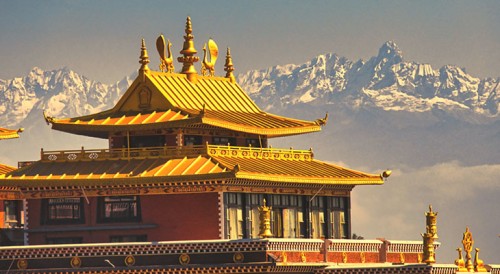
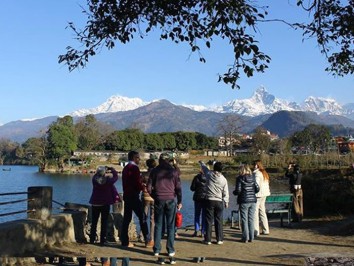
Gabriella Nel

5th May, 2022


Recommended - Boutique Hotel in Thamel, Kathmandu

Charming Newari Heritage Hotel in central Kathmandu, with a rooftop restaurant for stunning valley views.
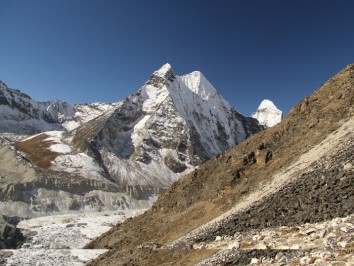
Everest Boutique Hotel
footer graphic

We are associated with

Acceptable payments

Find & Follow Us on

© 2011 - 2026 All rights reserved. Mountain Mart Treks & Expedition. Developed By: Xenatech Nepal.